
Water and You

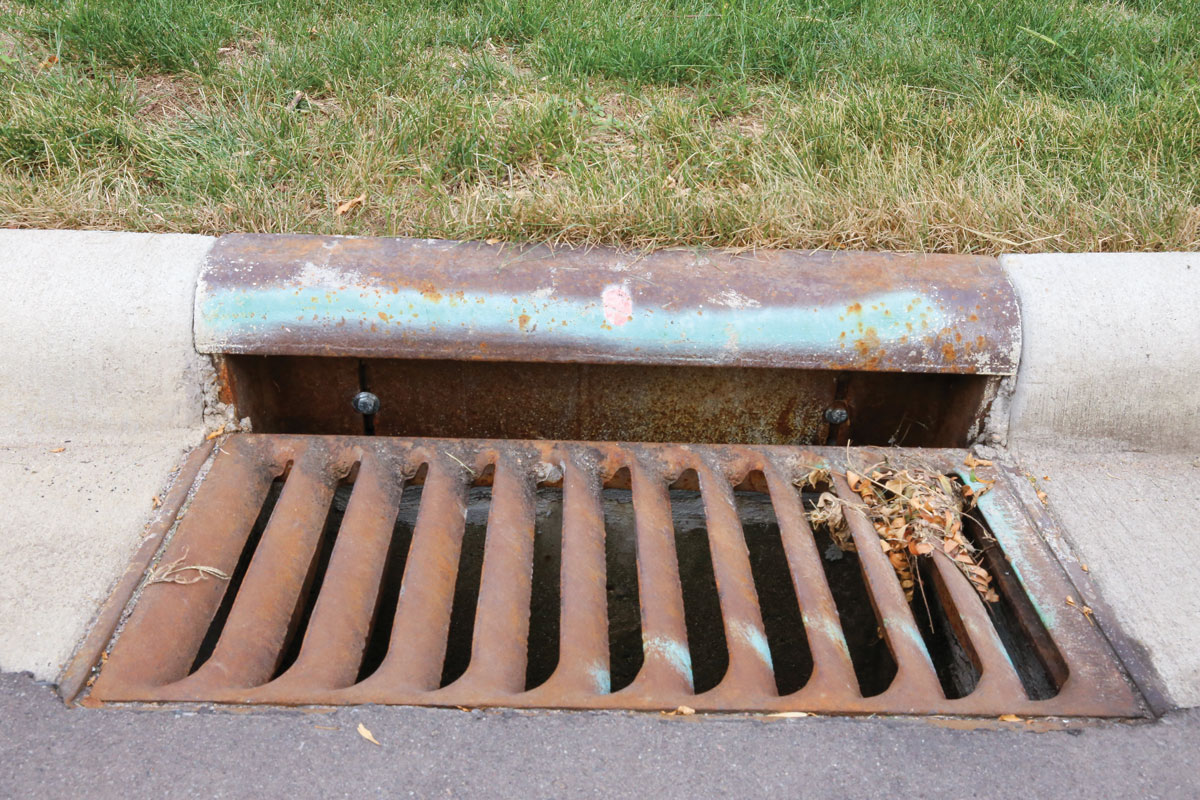
The adopt-a-drain program empowers residents to help improve Minnesota's water quality. Existing across the Twin Cities metropolitan area, adopt-a-drain is available to Bloomington residents. Visit adopt-a-drain.org more information and directions on how to adopt-a-drain.
As an adopt-a-drain volunteer you should expect to spend fifteen minutes, twice a month on adopt-a-drain duties. This time includes raking, sweeping, and removing debris from drains and their nearby streets and sidewalks.
You are also asked to track your impact by estimating the total amount of debris collected and entering it into your online account. This data helps gauge the cumulative results of the adopt-a-drain program. Help Bloomington become a top adopt-a-drain performer!
Storm drains flow directly into ponds, lakes, streams, and wetlands. If the water on your street looks dirty as it flows into the drain then it is going to be dirty when it comes out. Preventing debris from entering storm drains helps keep water clean.
Dirty water causes many issues. More nutrients in the water, from grass clippings and leaves, can cause Blue-green algae blooms in ponds and lakes. Pet waste can also flow into storm drains and cause E. coli outbreaks. Plastics and other trash can harm wildlife and reduce the beauty of our city.
Even if you do not join the adopt-a-drain program, try to keep the roads and sidewalks clean. Do not put grass clippings or leaves into the street or sweep them up if you do.

In this case, a buffer refers to a strip of land, growing native plants, that is between a waterbody and nearby land uses. Buffers protect the nearby water body by cleaning rainwater as it flows overland, stabilizing the shoreline and providing important habitat.
Wherever possible, it is a good habit not to mow directly to the edge of a water body. Beyond that, the size of the buffer is up to you but keep in mind that the bigger it is, the better. The minimum recommended width for any buffer is twenty feet but, taking site limitations into account.
If you would like to install a buffer, the steps are very similar to planting a native lawn. You can also visit the following links for more information:
Inside
- Run only a fully loaded dishwasher or washing machine.
- When hand washing dishes, use one sink basin for washing and one for rinsing.
- Keep drinking water cold by storing a pitcher of water in the refrigerator.
- Repair leaky faucets. Replace worn washers, the common source of leaks.
- On older toilets, fill a plastic bottle with water, seal the lid and drop it in your toilet tank to save approximately two gallons per flush.
- Turn off the water while you brush your teeth with toothpaste; then turn it on again to rinse.
- Don't stay in the shower longer than you need to. Turn off the water while you soap up.
Free low-flow showerheads
To help conserve water, CenterPoint Energy is offering free low-flow showerheads to their customers whose homes were built before 1992. To receive the showerhead, contact CenterPoint Energy Customer Service at 1-866-418-0658 (toll free) or visit CenterPoint Energy's website.
Outside
- Water the lawn in the early morning or later in the evening, but not between the hours of 10 a.m. and 5 p.m. Make sure you aren't watering the street or sidewalk.
- Maintain a lawn height of two-and-one-half to three inches. This helps protect the roots from loss of moisture through evaporation.
- Aerate clay soils at least once a year to help the soil retain moisture.
- Mulch around plants, bushes and trees. This encourages healthy roots, while maintaining root moisture.
- Collect rainwater to be used for garden and houseplant watering.
Sprinkler systems
For those who have in-ground irrigation systems, utilize a rain sensor shutoff device to prevent water waste. The State of Minnesota enacted a law (Minnesota Statutes, chapter 103G.298) in 2005 that requires "all automatically operated landscape irrigation systems include rainfall sensors." It requires that the "sensor technology will inhibit or interrupt the operation of the landscape irrigation system during periods of sufficient moisture."
Also, if you have a timer on your irrigation system, make sure that you are not watering during the heat of the day (10 a.m. - 5 p.m.), as most of the water from your system will evaporate prior to soaking into the soil. This fall or early next spring may be a great time to have a sensor installed on your irrigation system.

Spring Flooding
The warm temperatures of spring melts snow. This extra water can build up and, if there is enough of it, can cause a strong potential for localized spring flooding.
What can you do?
- Be prepared: move valuables out of low areas in your house and test your sump pump
- Consider flood insurance (note the 30-day waiting period): MN DNR information regarding Flood Insurance
- Prepare your property: The graphic below shows tips that you can take to minimize the localized flooding risk to your home.
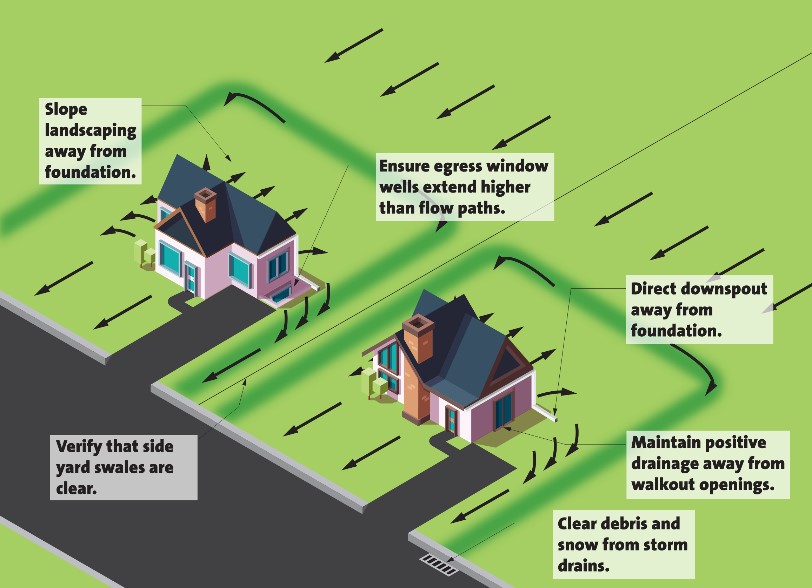
If the risk of localized flooding is high, sand and bags will be provided for Bloomington residents at the Western Maintenance Facility, 10500 Hampshire Ave S.
Flood insurance information
National Flood Insurance Program's Floodsmart.gov
Check the flood risk and estimated insurance costs for a property.
Federal Emergency Management Agency (FEMA)
Search the flood info section for maps and other resources.
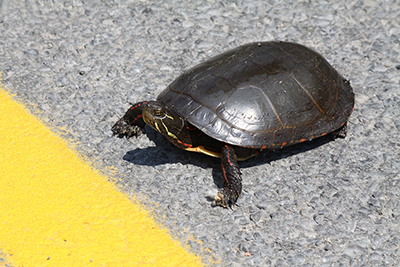
Every spring, many female turtles move from lakes, ponds, wetlands, rivers and streams to nesting areas where they deposit their eggs in self-excavated nests.
Unfortunately, many nesting areas are separated from the turtles' wintering areas by roads. As a result, turtles are often observed crossing roads as they make their way to nesting areas.
You can help reduce vehicle-related mortality for turtles by observing these guidelines:
- Allow turtles to cross roads without assistance. When turtles can safely cross roads unaided due to a lack of oncoming traffic, allow them to do so. Observe from a distance and avoid rapid movements as doing otherwise will often cause turtles to change direction, stop, or seek shelter within their shells.
- Avoid handling turtles excessively. While a desire to inspect turtles closely is understandable, excessive handling can disrupt their normal behaviors. Prolonged examination of turtles should therefore be limited to only one or two individuals of each species.
- Maintain turtles' direction of travel. Always move turtles in the same direction they were traveling in when you encountered them. Turtles should always be moved across roadways in as direct a line as possible.
- Check around your vehicle for hiding turtles. Some species of turtles will go into parking lots, get confused and hide in the shade under the cars. Please look for turtles before leaving a parking space so that they aren't accidentally backed over.
- Slow down and drive around turtles on the road. Many people want to help turtles cross the road which is understandable. The best approach is to let the turtle cross unassisted.
Minnesota has nine turtle species, some of which are protected. The three species you are most likely to see in Bloomington are the Painted Turtle, Snapping Turtle and Blandings Turtle, which is a protected species.
- Visit the turtles page on the Minnesota DNR's website for more information on Minnesota turtles.
- Video URL: https://www.youtube.com/watch?v=-rpoo0n4nSA&t=30s
 Turtles on the Move
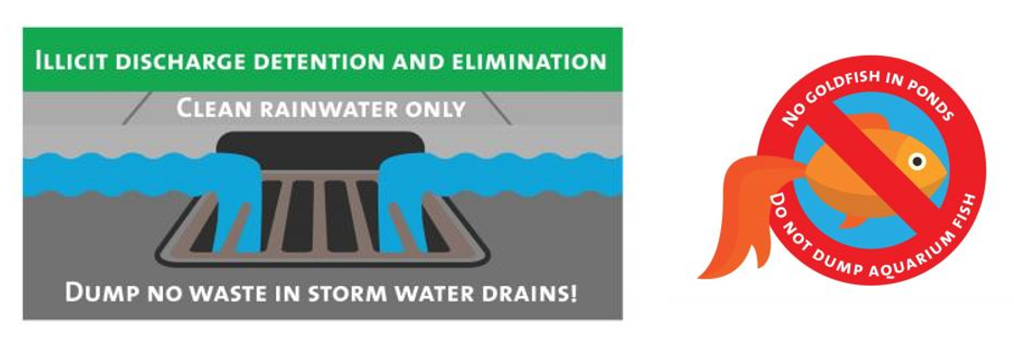
If you are looking to report an illicit discharge, please contact the City of Bloomington Engineering department at:
City of Bloomington Engineering
- 952-563-4870 or engineering@BloomingtonMN.gov
City of Bloomington Environmental Health
- 952-563-8934 or envhealth@BloomingtonMN.gov
Preventing pollution from damaging water is a key priority of the City of Bloomington’s Illicit Discharge Detection and Elimination System (IDDE). Noxious chemicals may come to mind when thinking about pollution in water but there is a wide variety of pollutants that are prohibited from entering water bodies. See the list below for some common examples of illicit discharge events. If you see illicit discharge, please report it to the City using the contact information presented above.
While direct dumping of pollutants into water bodies happens on occasion, the most common way that pollution gets into the lakes, ponds, wetlands, and streams of Bloomington is through storm drains. Storm drains connect to pipes that outlet directly into water bodies – the water in these pipes is not cleaned. Please, do not put anything other than clean water in storm drains. If you want to learn more about how to prevent pollution from entering storm drains please see the Adopt-A-Drain program.
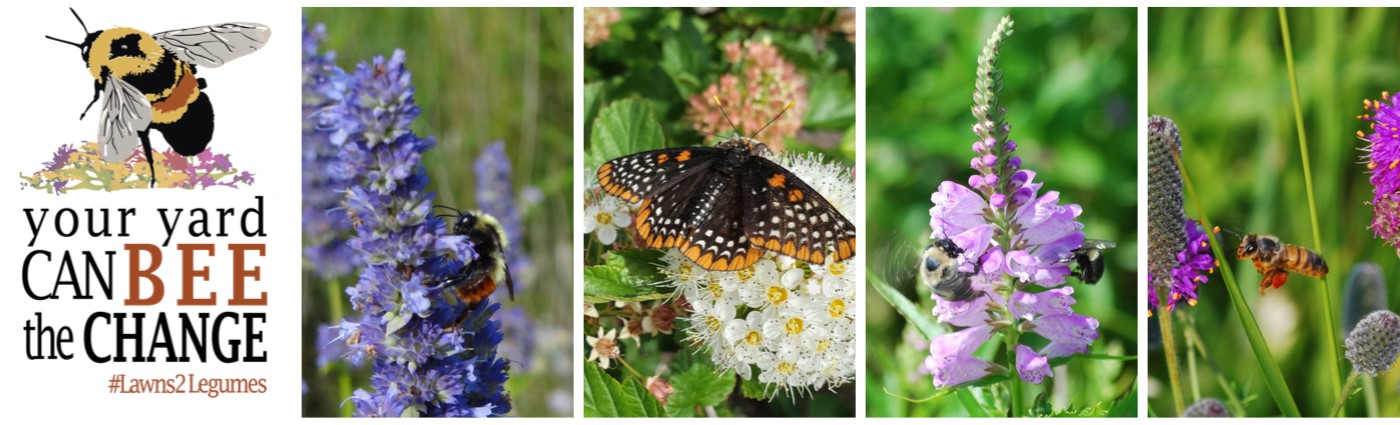
Turf grass is great for recreation. However, in most cases the common turf lawn is rarely used. This is a problem because too much turf-grass is harmful to local ecology. turf-grass lawns are not very good at filtering rain water, are biologically sterile, and take a tremendous amount of time and effort to maintain. The good news is that there is an alternative: meadow lawns.
There are a lot of different ways to convert a turf-grass lawn into a meadow lawn. You can go simple and plant low growing, native grasses as turf alternatives. These allow you to use your yard in ways not so different from when it was turf. Or, you can dedicate your meadow to local wildlife using a wider variety of plant species. Either way, replacing turf-grass with native plants is helpful for the local ecology. Plus, once established, a meadow lawn requires less maintenance than the turf lawns of old.
Lawns to Legumes
The Lawns to Legumes program offers a combination of workshops, coaching, planting guides, and cost-share funding for installing pollinator-friendly native plantings in residential lawns. The program has three components:
- Grants to demonstration neighborhoods
- Grants and coaching for individual landowners
- Outreach and education for all interested Minnesota residents
Resources:
Protect Bloomington’s ponds, lakes, streams, and rivers by using fewer chemicals on your lawn and keeping leaves, grass clippings, and debris out of the street and out of the storm drains. Plant a rain garden for natural on-site control of stormwater runoff.
What is a rain garden?
A rain garden is a garden designed with a depression to capture stormwater runoff in your yard from places like downspouts or paved areas. Runoff from your yard is routed into the garden where plants and soils help remove nutrients and other pollutants by allowing the water to soak into the ground. Rain gardens mimic the natural process of soaking up water where it falls, thereby reducing the amount of water and pollutants that run off our rooftops, lawns, and driveways into our water bodies. Rain gardens provide a natural way to help control stormwater pollution while creating an opportunity for homeowners to design an attractive landscaped garden.
Why are rain gardens beneficial?
A rain garden provides property owners an opportunity to turn drainage or erosion issues in your yard into a beautifully landscaped garden area. Rain gardens help capture and absorb rainwater and snowmelt before it flows untreated into our storm sewers, enroute to Nine Mile Creek and the Minnesota River. A rain garden is 30% more efficient in soaking up water than turf grass. The large root masses of the vegetation in the garden loosen the soil and help water soak into the ground. As a result, a rain garden improves water quality by reducing the amount of runoff and removing nutrients and other pollutants as the water comes into contact with the plant roots and soil microbes.
What are some of the design features of rain gardens?
A rain garden is designed to channel runoff into a vegetated swale or low area away from a house foundation. Features of rain gardens include a shallow flat basin, gentle side slopes, soil that allows infiltration, and vegetation that traps runoff and prevents erosion. Each property presents unique opportunities and challenges in incorporating a functioning rain garden. Designs can vary from a small low spot in a backyard to a larger project, engineered with underdrains and grading.
Dimensions - There is no standard size, your rain garden should be designed to fit your property and the space you have available in your yard.A common approach is to size the garden to capture the first inch of rain that falls on the area draining to the garden, which will capture 90% of storm runoff.Lawn edging or stone walls provide a crisp, neat edge that is visually appealing.
Depth – A good rule of thumb is 6’’ in heavy soils and up to 12’’ in sandy soils.
Location - A rain garden should be placed where rain and snowmelt will drain into the depression.Locate the garden near impervious surfaces, such as patios, driveways or sidewalks, and under downspouts or gutters to capture the rain as close as possible to the point where it falls.Locate rain gardens at least 20 feet away from house foundations.Gardens should not be located in areas where plants may obstruct driver sight lines or over underground utilities.Remember to call Gopher State One Call at 651 454 0002 before you dig.
Soil considerations – A good loose, uncompacted organic soil is desired.One method is to over-excavate 4 to 6 inches, till the subsoil and then till in 2 to 3 inches of compost or peat moss with the over-excavated soil.This will help sandy soils retain moisture and loosen clay soils to allow infiltration.A mulch layer on the surface of the garden bed aids in the decomposition of organic matter, prevents erosion, and helps to suppress weeds.Shredded hardwood mulch is recommended because it resists flotation and has a greater surface area for binding pollutants in runoff.
Plant selection–-Plant species that tolerate the of extremes of wet soils and very dry soils are preferred for rain gardens. The plant location within the rain garden is an important consideration; locate plants such as Joe Pye weed, Siberian iris, and Tussock sedge in the wet bottom. On the drier edges and side slopes consider grasses like little bluestem, or flowers like purple coneflower. Native plants are attractive to butterflies and provide habitat for birds and although low in maintenance, still require care, occasional weeding and control of diseases and inspect pests.
What about maintenance and mosquitoes?
Like all gardens, rain gardens require some maintenance: weeding, pruning, plant replacement, mulching, and supplemental watering.In addition, rain gardens may need additional care like sediment removal to maintain their effectiveness.As for mosquitoes, a properly designed rain garden should not lead to mosquito breeding because a rain garden is not intended to detain standing water for long periods.Ideally runoff will not be detained longer than 24 hours in the garden.Mosquitoes will not survive in wetlands that dry out in less than one week after a summer rain.
Does my rain garden plan need to be reviewed by the city?
In certain circumstances it may be necessary for the city to review the rain garden plan before construction.Rain gardens constructed entirely within your property typically will not require a plan review.A plan review is required for any rain garden construction if you are proposing to:
Install a curb cut on a public street.
Construct a rain garden within the right-of-way.
Construct a rain garden within a drainage and utility easement.
Move more than 25 cubic yards of material.
A plan review by the city will determine any additional requirements that may be necessary and insure the rain garden is constructed according to all applicable city requirements.In some instances this may require additional permits or agreements and associated fees.
How do I get my plan reviewed by the city?
At a minimum, you will need to fill out an application and submit an accurate sketch describing your proposed rain garden that includes all applicable information such as: address of property, property lines, location of buildings, location of proposed rain garden, how water will enter the rain garden, location of underground utilities, and the location of the curb cut for engineering plan review. The sketch must be drawn to scale or you must include dimensions of the relevant information.
The sketch can be as detailed as engineering drawings; a hand drawn sketch, or you may obtain a plot with approximate property lines for a fee from the City’s Engineering Division with which you can indicate the relevant information.
The sketch must be submitted to the Engineering Division at the Public Works Building. The review process may take up to two weeks.
Applicants performing a curb cut or working within the right-of-way must be bonded. Contact the Engineering Division for requirements.
Please visit the Rain Gardens Web Page for further information
There are many ways to volunteer with water related activities. This page describes a few organized groups that are dedicated to water topics. These groups include:
- Master Water Stewards
- Citizen Assisted Monitoring Program (CAMP)
- Wetland Health Evaluation Program (WHEP)
See below for more information on each organization and happy volunteering!

Organized under the Freshwater Society the Master Water Stewards is described as a program that certifies and supports community leaders to prevent water pollution and educate community members to conserve and protect our waterways. The program is a partnership between Freshwater and participating cities, counties, watershed management organizations and non-profits.
Please visit their website for more information:
Citizen Assisted Monitoring Program (CAMP)
Volunteers to help monitor the health of Bloomington’s lakes! In Bloomington, this program is run by the Nine Mile Creek Watershed District. Visit the following links for more information:
CAMP is a Metropolitan Council - Environmental Services program where citizen volunteers monitor water quality in the Twin Cities metro area. Training and equipment are provided. Access to a boat is required.
In Bloomington, the following lakes are monitored: Bush Lake, Normandale Lake, and Lower Penn Lake.
A volunteer should expect to collect data on a bi-weekly basis (April-October). Water samples will be sent to a lab and tested for total phosphorus, nitrogen, and chlorophyll-a. A volunteer will also obtain a Secchi transparency measurement, and provide some user perception information about the lake's physical and recreational condition.
The main purpose of CAMP is to provide the City and other water managers with water quality information. This data helps in resource management and documentation of water quality impacts and trends.
Wetland Health Evaluation Program (WHEP)
WHEP is a program that engages citizen volunteers to help monitor wetlands throughout Dakota and Hennepin Counties. Each year Bloomington chooses a few wetlands for WHEP volunteers to survey. The data they collect helps inform restoration and management decisions.
Volunteers are typically recruited and asked to register between March and May of each year. Visit the WHEP website for more information and select the “Get Involved” tab for specific information on volunteering:
Leaves
Which is the most dangerous to the health of water bodies: fertilizer, pesticides, grass clippings, motor oil, or leaves?
Many people don't realize that leaves and grass clippings are harming our water resources. The truth is, these organic materials do more damage than fertilizers, pesticides and motor oil.
When raked or blown into the street, leaves make their way into storm sewers and travel directly into our water bodies. As they decay, they release nutrients that harm the delicate ecosystems.
- Compost your leaves. It's the surest way to keep them out of the streets and storm drains, and thus, out of the wetlands, lakes and streams.
- Chop your leaves with a power mower. A fine layer of chopped leaves provides nutrients to your lawn.
- Use leaves around rose bushes and landscape plants. Leaves make an excellent winter mulch.
- Bag your leaves for pick-up.
Fertilizers and Pesticides
Fertilizer may be necessary for your lawn's health. However, the nutrients in fertilizer can be harmful to the water ecosystem. Applying the right fertilizer, in the right amount, ensures healthier lawns and water bodies.
- Have your soil tested. Knowing what kind of soil you have helps you determine what kind of fertilizer your lawn needs.
- Fill fertilizer spreaders on a hard surface. This makes spills easier to clean up. Never wash spills into the street.
- Close the gate on your spreader when you cross hard surfaces. Sweep up fertilizer that falls on the sidewalk, street or driveway.
- Follow label directions exactly. Keep pesticides off hard surfaces, and never pour excess pesticides into storm drains.
Did you know that Minnesota soils are naturally high in phosphorous?
In the past, lawn fertilizers commonly contained levels of phosphorous high enough to be dangerous to Bloomington water bodies. New regulations prohibit phosphorus in fertilizers under most circumstances.
Motor Oil
Oil that drips onto driveways and streets washes into storm drains and directly into our water bodies. Five quarts of oil in a lake can create a slick as large as two football fields and cling to mud and plants for more than six months.
- Keep cars tuned up and repair leaks.
- Clean up oil spills on your driveway promptly.
- Collect oil and other automotive fluids for recycling. Drop them off at the South Hennepin Recycling and Problem Waste Dropoff Center, 1400 West 96th Street, 612-348-6500.
Grass Clippings
Clippings left on streets and driveways wash into the storm drains and directly into our water bodies. When grass decays, it releases dangerous amounts of phosphorus.
- Leave grass clippings on your lawn. They provide valuable nutrients.
- Use a mulching mower or equip a standard mower with a mulching attachment. This reduces the clipping size and increases the rate at which the clippings decompose.
- Sweep up and recycle clippings that fall on the driveway, sidewalk or street. Sweeping clippings into the street is just like sweeping them into our water bodies.
Litter and Trash
Litter and trash in our storm drains becomes litter and trash in our water bodies.
- Sweep up litter and trash from your driveway or sidewalk. Don't sweep it into the street.
Pet Waste
Pet waste left on or near driveways, sidewalks or streets can make its way into storm drains and travel directly into our wetlands, lakes, creek and river. As pet waste decays, it releases nutrients and bacteria that damage the ecosystem.
Rain Barrels and Rainwater Gardens
Rain barrels capture water from each rainfall, allowing users to reduce the amount of treated municipal water needed to irrigate yards and gardens. Rainwater gardens can be planted in waterlogged "low spots," changing a lawn care problem into a natural and beautiful way to control water runoff.