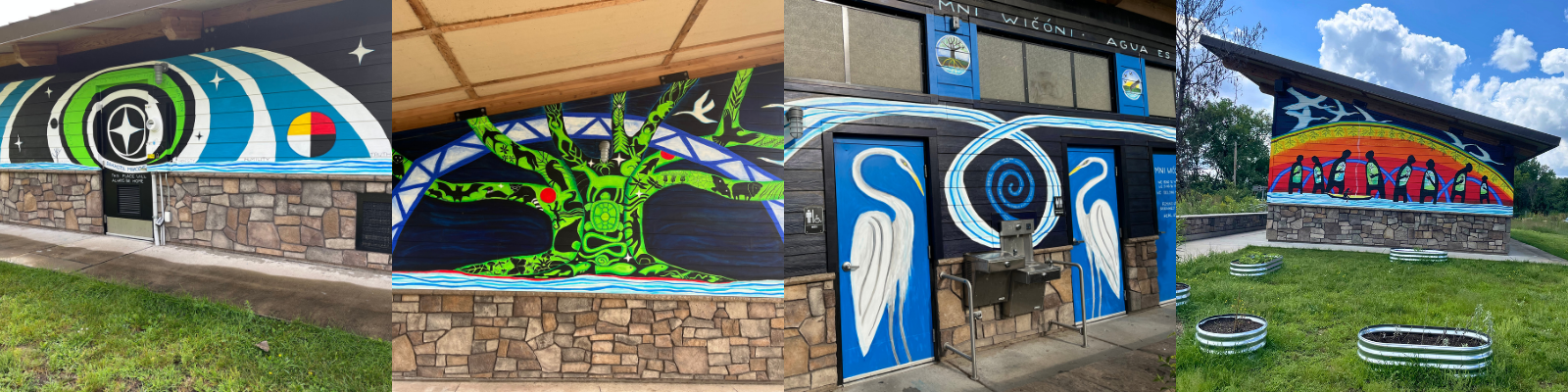
Haŋté (Cedar) Healing Bridge
The Old Cedar Avenue Bridge Trailhead Mural & Indigenous Garden
An archive of art, place, and relationship
Introduction: A Place of Bridging
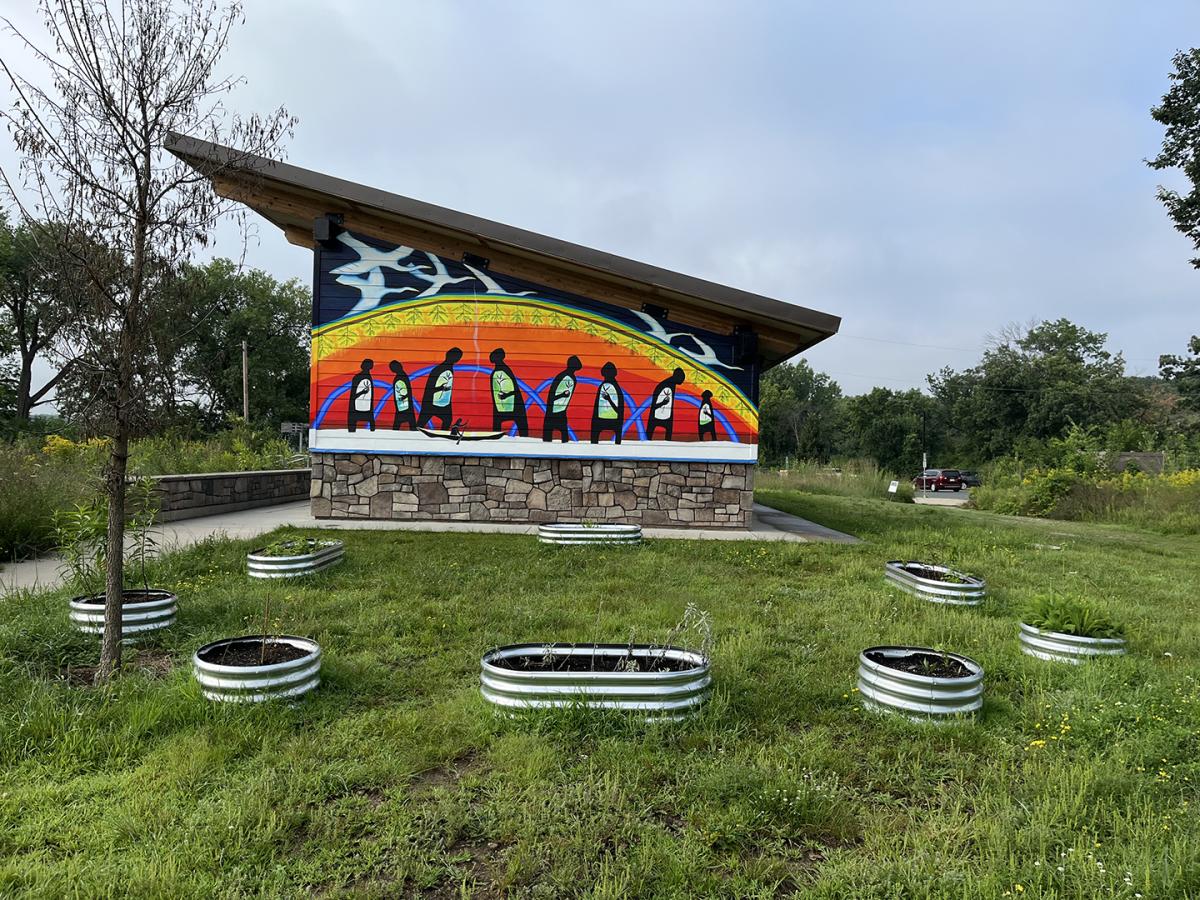
At the trailhead of the Old Cedar Avenue Bridge stands a small building that now holds a large story. Local artist Sandy Spieler and Dakhóta cultural educator Tara Perron (Tanaǧidaŋ To Wiŋ) partnered to create a four-sided mural and living Indigenous garden that invites reflection on the many ways we are all bridges—between past and present, land and water, people and spirit.
The project aligns with the goals of the Citywide Creative Placemaking Plan, which aims to incorporate art, beauty, and a sense of belonging into public spaces. Completed in 2025, the mural and garden now serve as an open-air classroom and place of reflection, and an ongoing opportunity to learn from this land and the communities connected to it.
Theme developed by Sandy Spieler and Tara Perron (Tanaǧidaŋ To Wiŋ). The following sections are summaries based on artist proposals and engagement reports.
The central question guiding the artists was: "Can the 'Bridge' of this site be experienced as a verb as well as a noun?"
The mural explores this idea through colors, storytelling, and symbolism. It transforms the Trailhead shelter into a gathering place where visitors can consider bridging as an action: connecting, carrying, healing, and honoring.
From early design conversations and a community engagement event titled Here, Now: Instructions for Listening (July 2023), a shared vocabulary emerged. These words and phrases are painted into the mural and embedded in its spirit:
Paint the Building as a Prayer
Cedar Bridge (cedar as medicine)
Connecting • Carrying us from here to there
Holding us in this place, this time
We are a bridge • Be a bridge
Water • The moon • Harmony
Praises and pleas for relationship
The building already served as a rest stop for trail users; through the mural, it has become something more - a prayer of relationship among people, land, water, and all living things.
Each wall of the Trailhead building carries a different part of the story of “Bridge.” Standing before each wall invites visitors to see themselves as part of that connection—looking outward into the landscape, past and future joined.
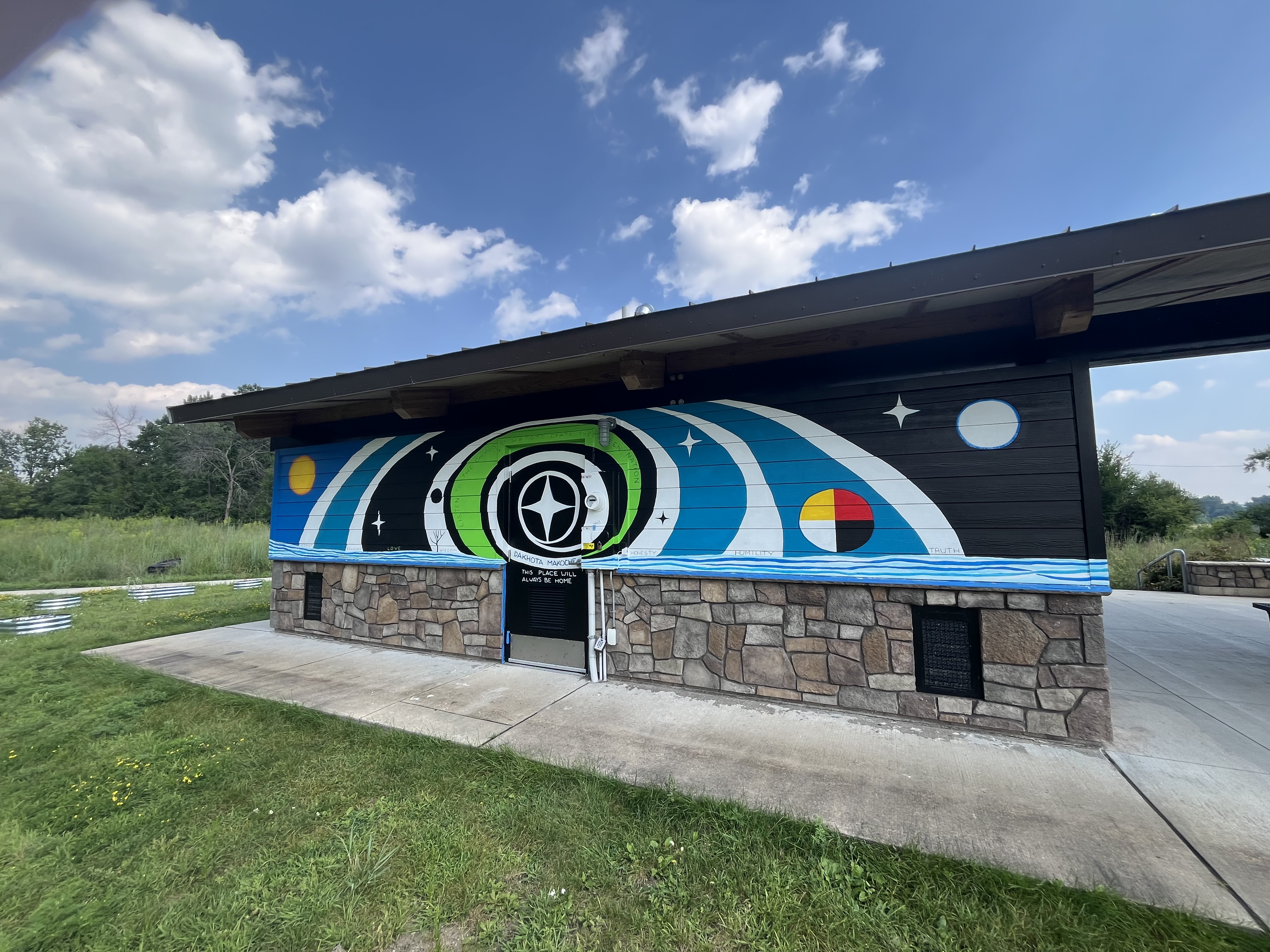
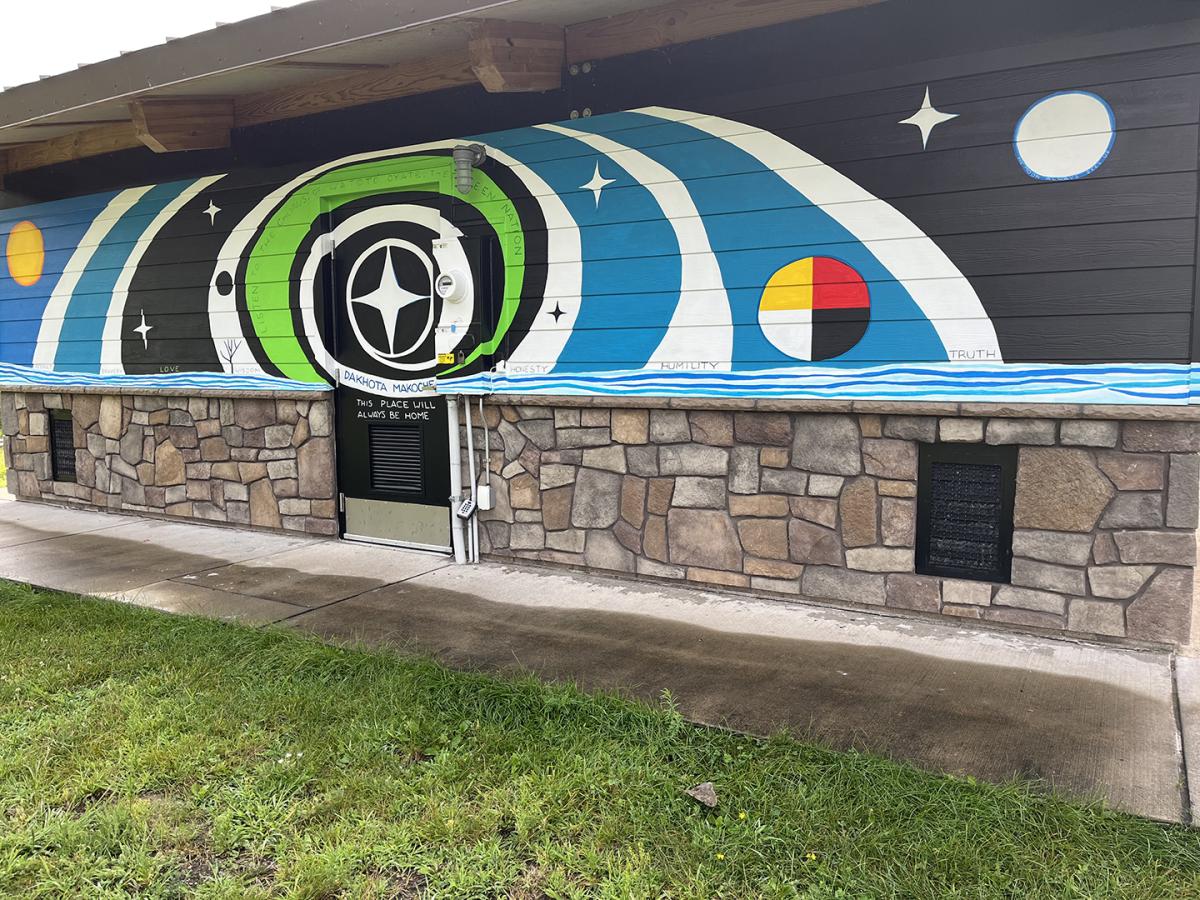
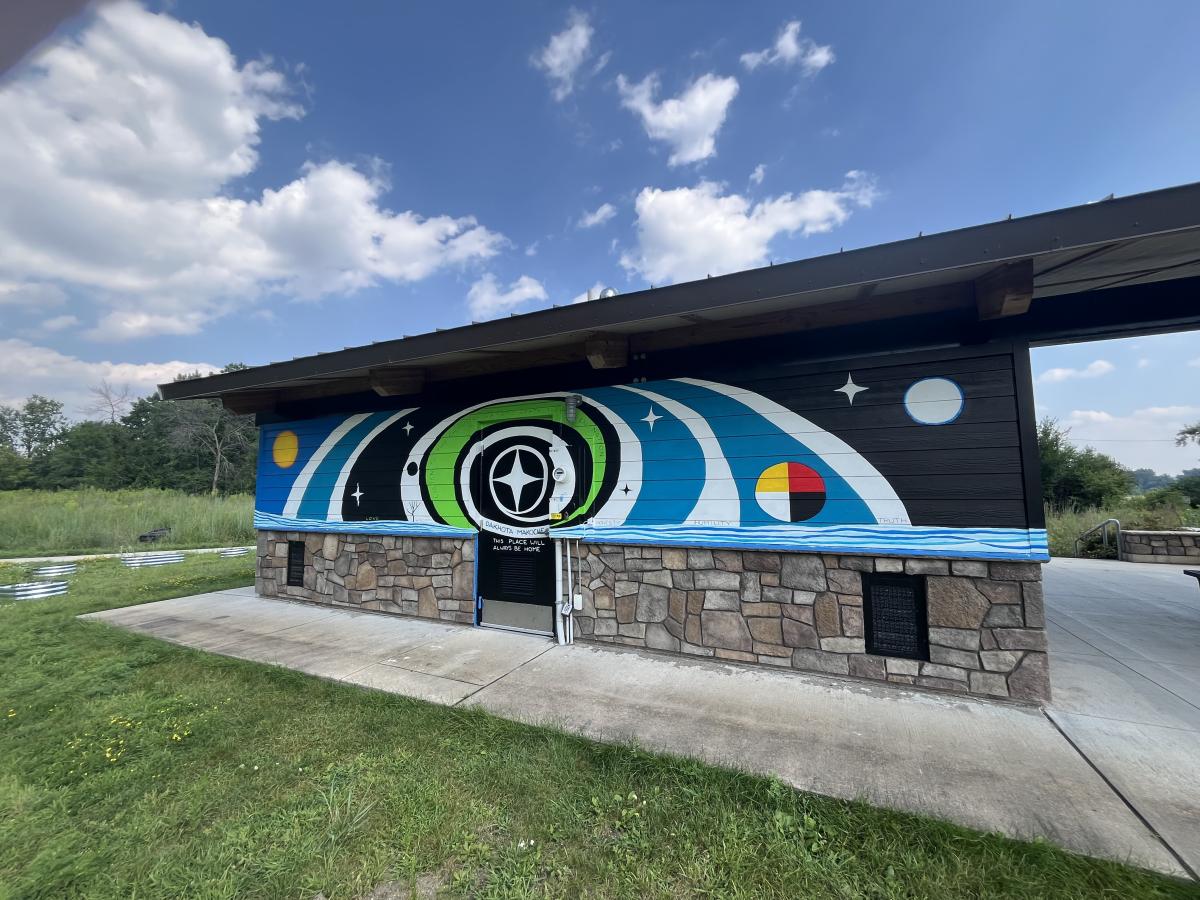
Home
Bridge of Time - Honoring Dakhóta homeland and the passage of generations who have cared for this place.
This side announces:
“Dakhóta Makoche, This Place Is Always Home.” It reminds us that we stand on ancient ground born from the cosmos, this ground being loved and tended by the Dakhóta peoples for many generations, a tradition that continues now and into the future. It reminds us to listen to the growing world, the Green Nation, Watoto Oyate, with gratitude for the nourishment of breath and food, protection and beauty. The 7 written words are core values of Dakhóta teaching: Love, Respect, Bravery, Truth, Honesty, Humility & Wisdom.
And there is the Dakhota Medicine Wheel.
"I will never forget the day when Tara organized some of her garden helpers to come to paint the colors on that Medicine Wheel. We all shared in the ceremony." - Sandy Spieler
Do you see the moon? The moon always sees us.
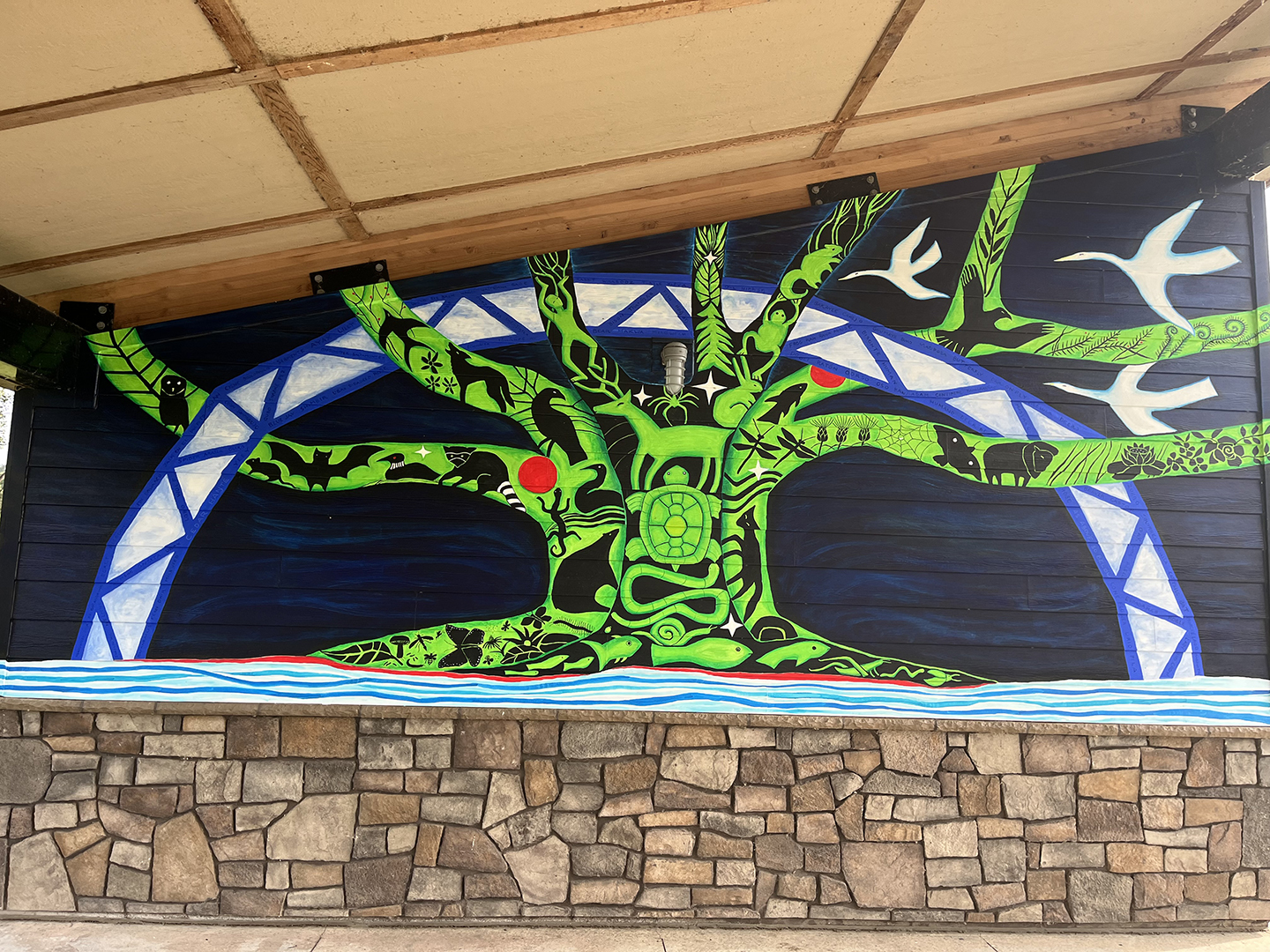
Kinship
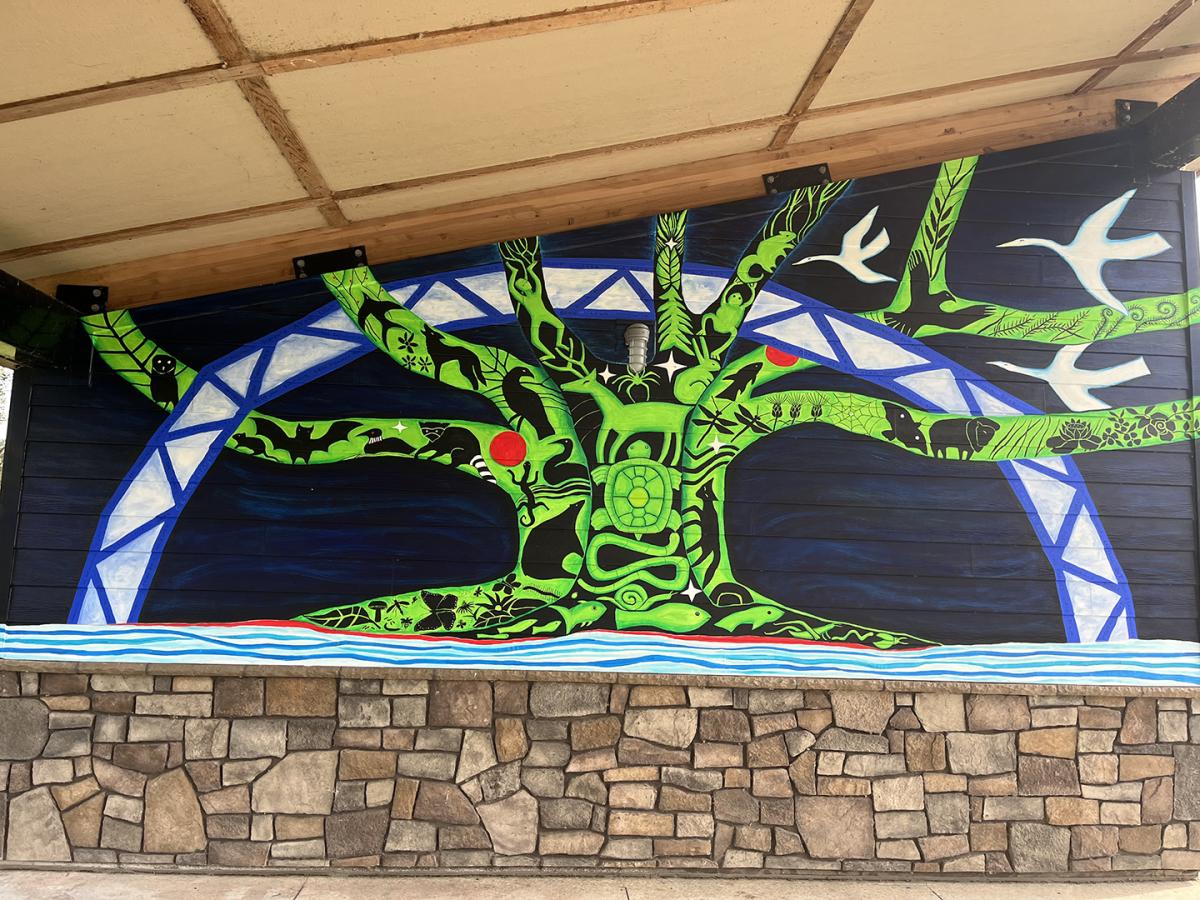
Bridge of Interconnected Life - Celebrating the relationships among all beings, seen and unseen.
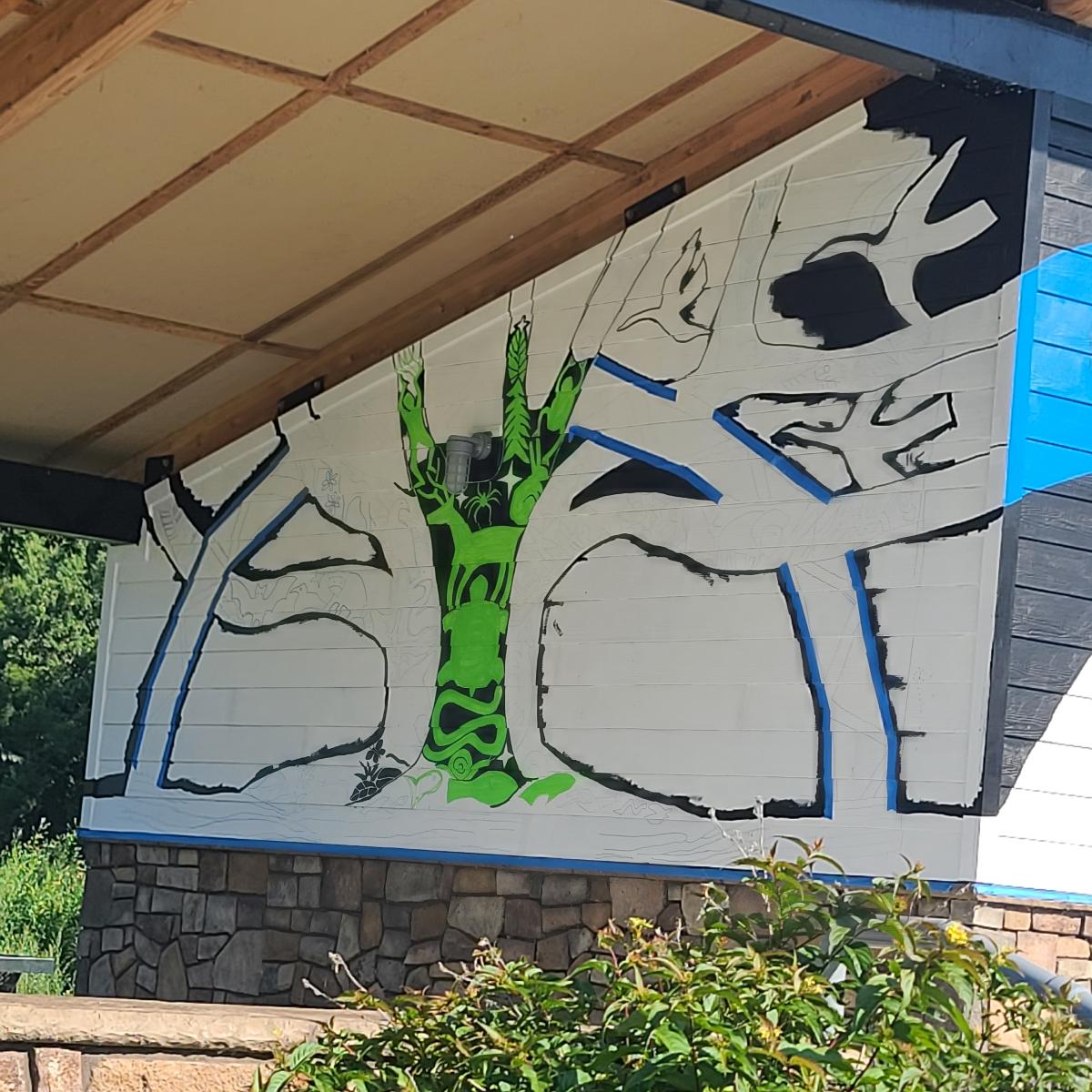
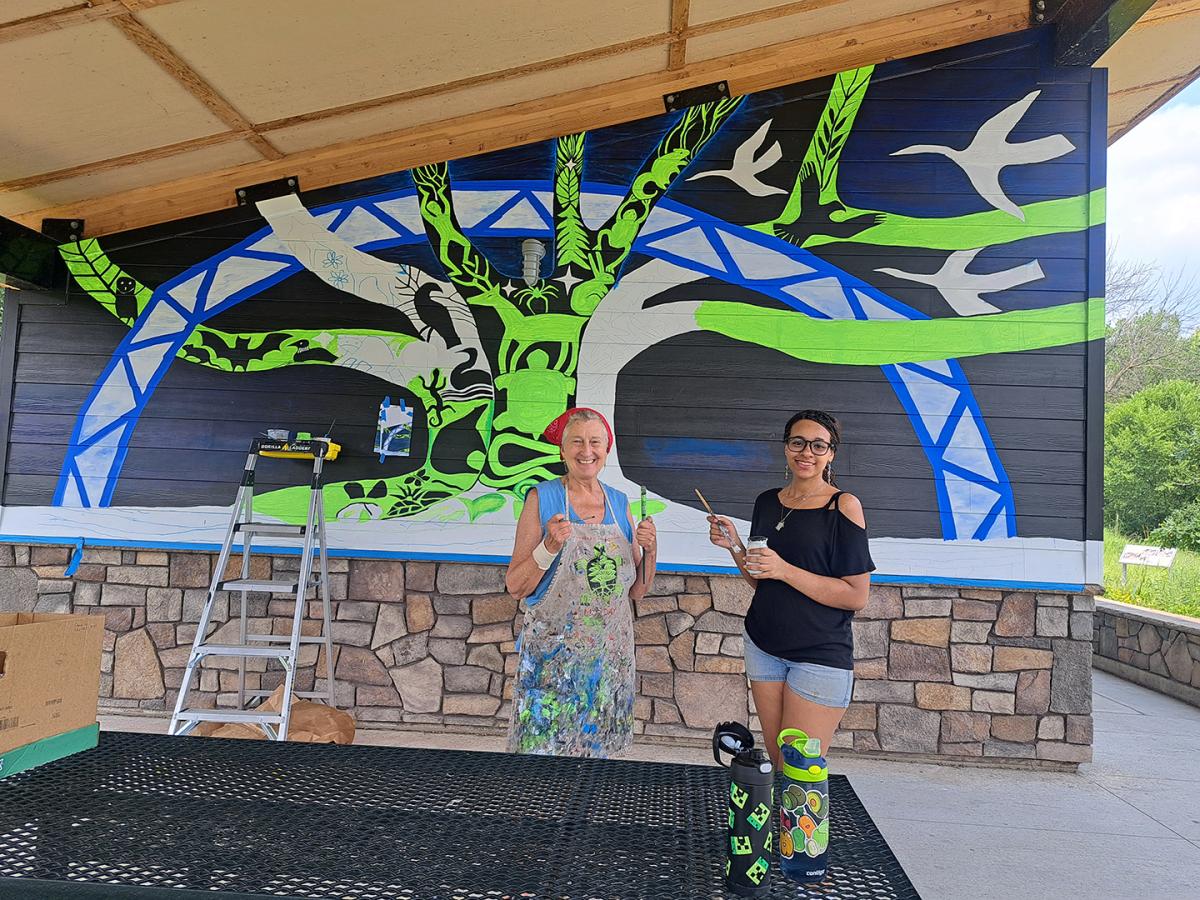
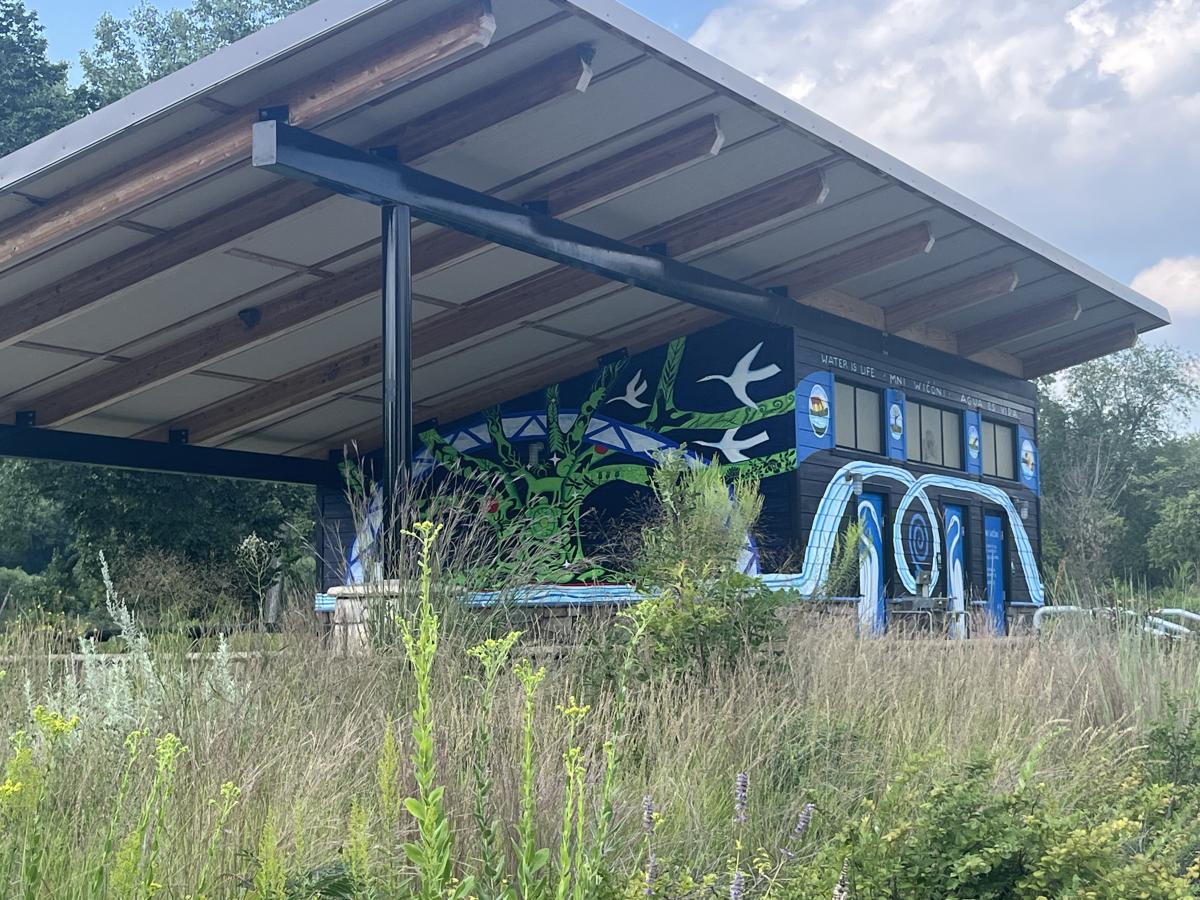
This Tree of Life faces into the expanse of this Refuge site. Perhaps you will first notice the sky, the trees, the wetlands, wild plants, and the paths leading in many directions. If you are still, you may be welcomed by some of the beings who live here -- maybe they will share a moment with you. Remember, you are the visitor here! This Tree of Life celebrates the Interconnection of All Life, specific to this place. All are Kin, All are Relatives. The Bridge that arches onto the Tree has the names of the flora and fauna painted into the Tree – written in Dakhóta, Ojibwe, English, Spanish, and Somali. Many insects live in the cracks of these walls, and they would often visit as Spieler painted. "I often felt they were asking to be painted. Can you find the mosquito? Do you see the spider?"
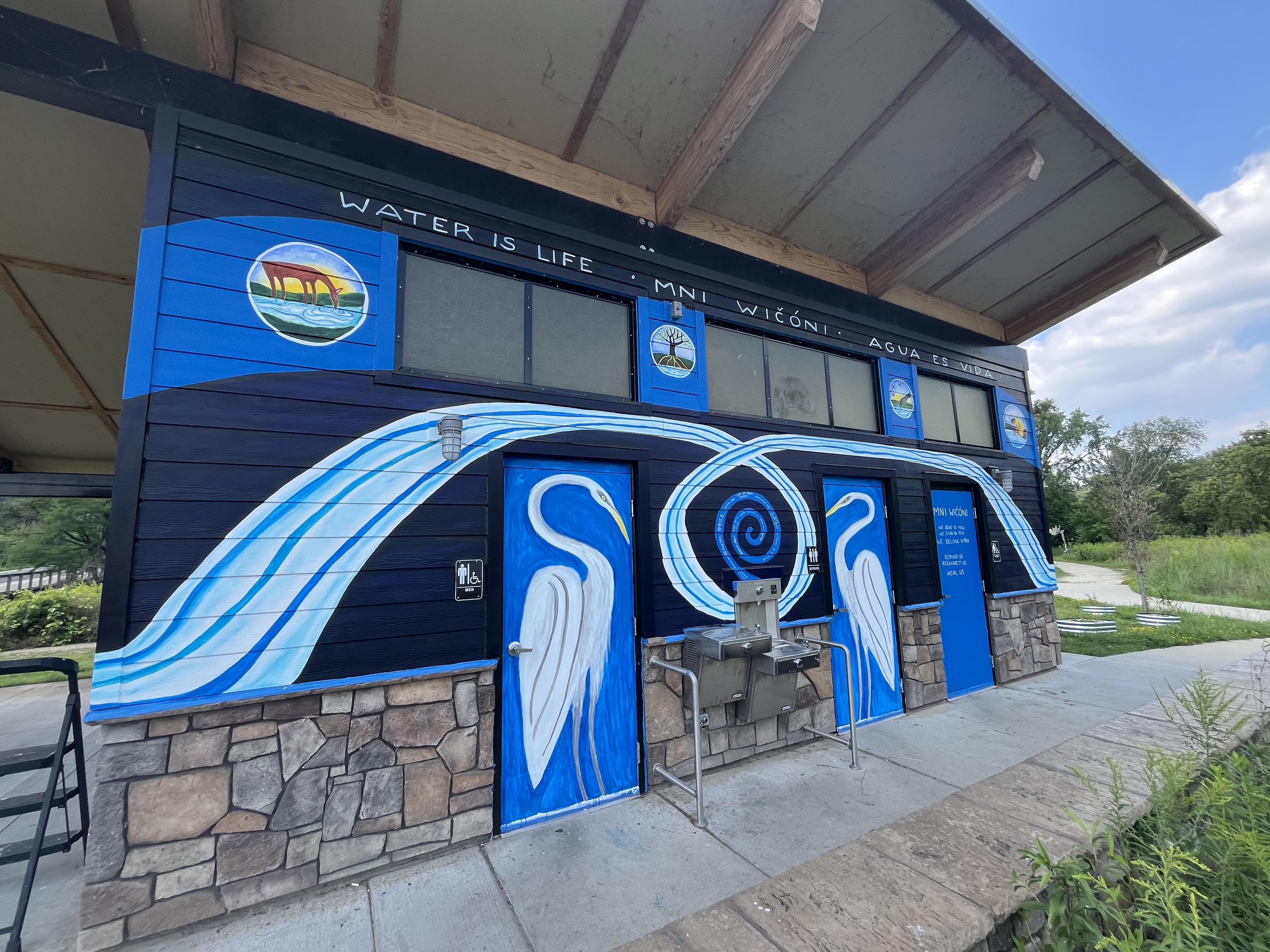
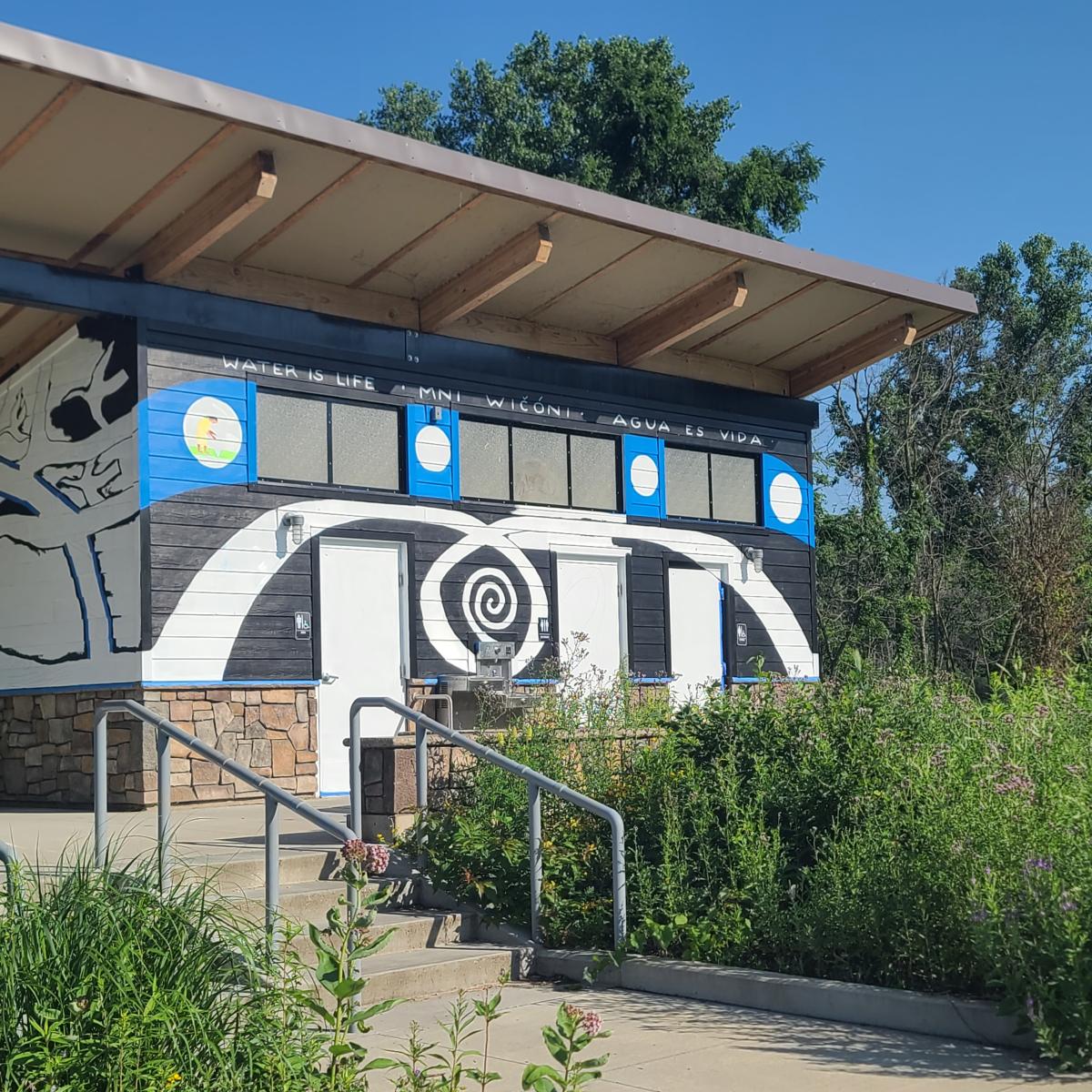
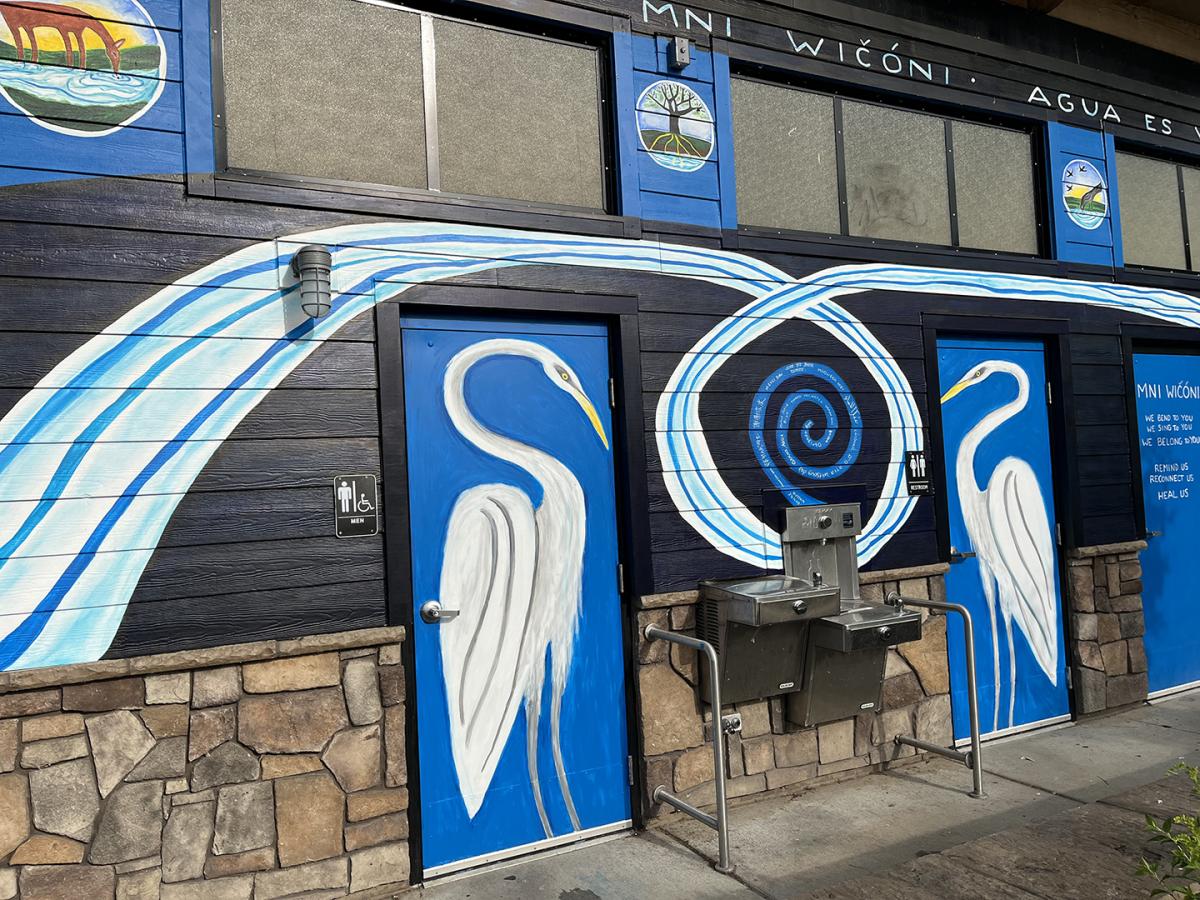
Water
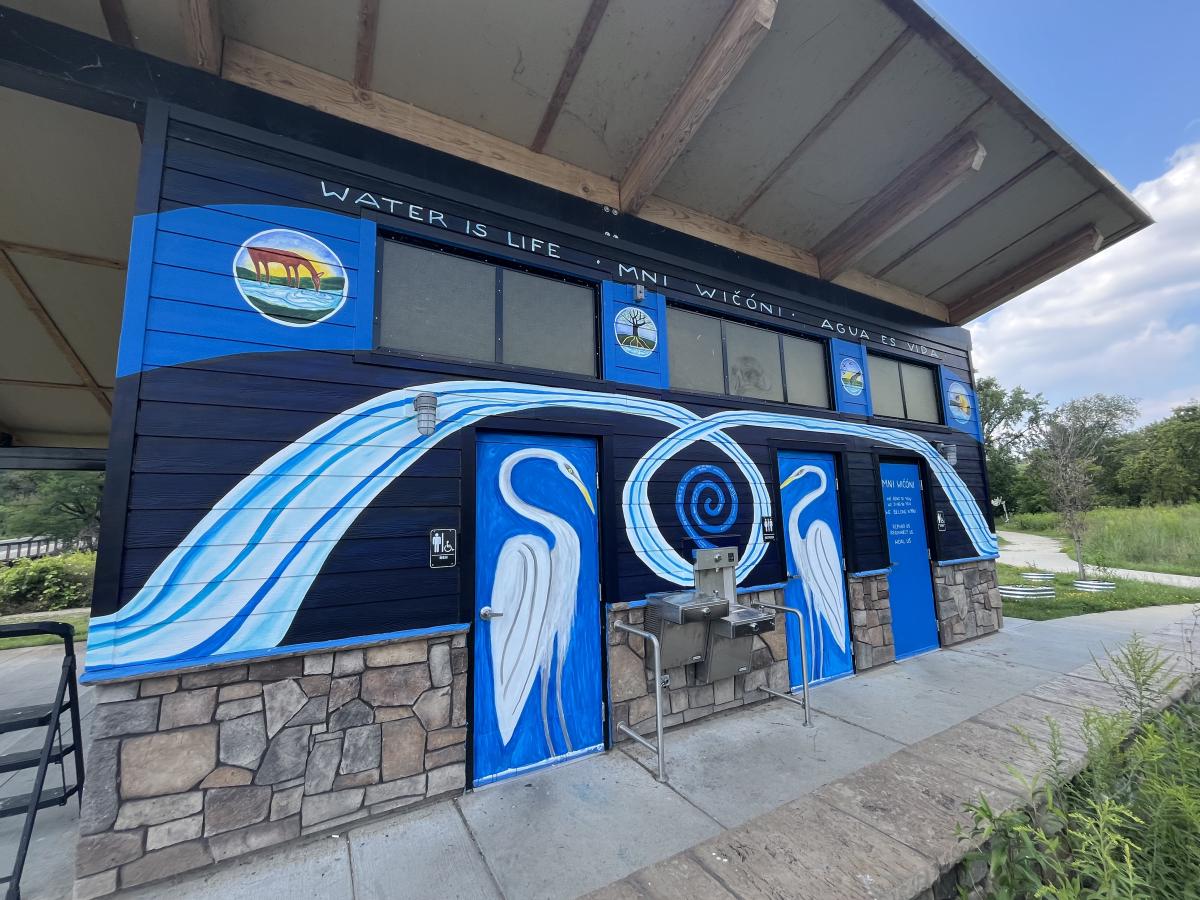
Bridge of Connection - Water carries memory, sustains life, and unites all living systems. This wall features a drinking fountain, inviting pause, gratitude, and renewal.
The Water connects us all, connects ALL life. Before there were human-built bridges, the water patiently and continually flowed from cell to cell, from sky to ground, from shore to shore, nourishing everything. Thank you, Water! The egrets agree.
Everyone who visits this site stops at this Oasis. The egrets were among the first to welcome Spieler as she visited this site; they now stand watch over the fountain, blessing YOU as you bow to receive the Water. The spiral above the fountain holds words of Thanks for Water written in German, Norwegian, Eritrean, Chinese, French, Hindi, Ojibwe, Arabic, Vietnamese, Hebrew, Spanish, Somali, English, Dakhóta, Korean, and Portuguese. The paintings above remind us that we share the act of drinking with all of life. Tara gave us these words: "MNI WIČÓNI. We bend to you. We sing to you. We belong to you.... Remind Us. Reconnect Us. Heal Us."
Do you notice that Water connects all of the sides of this building?
People
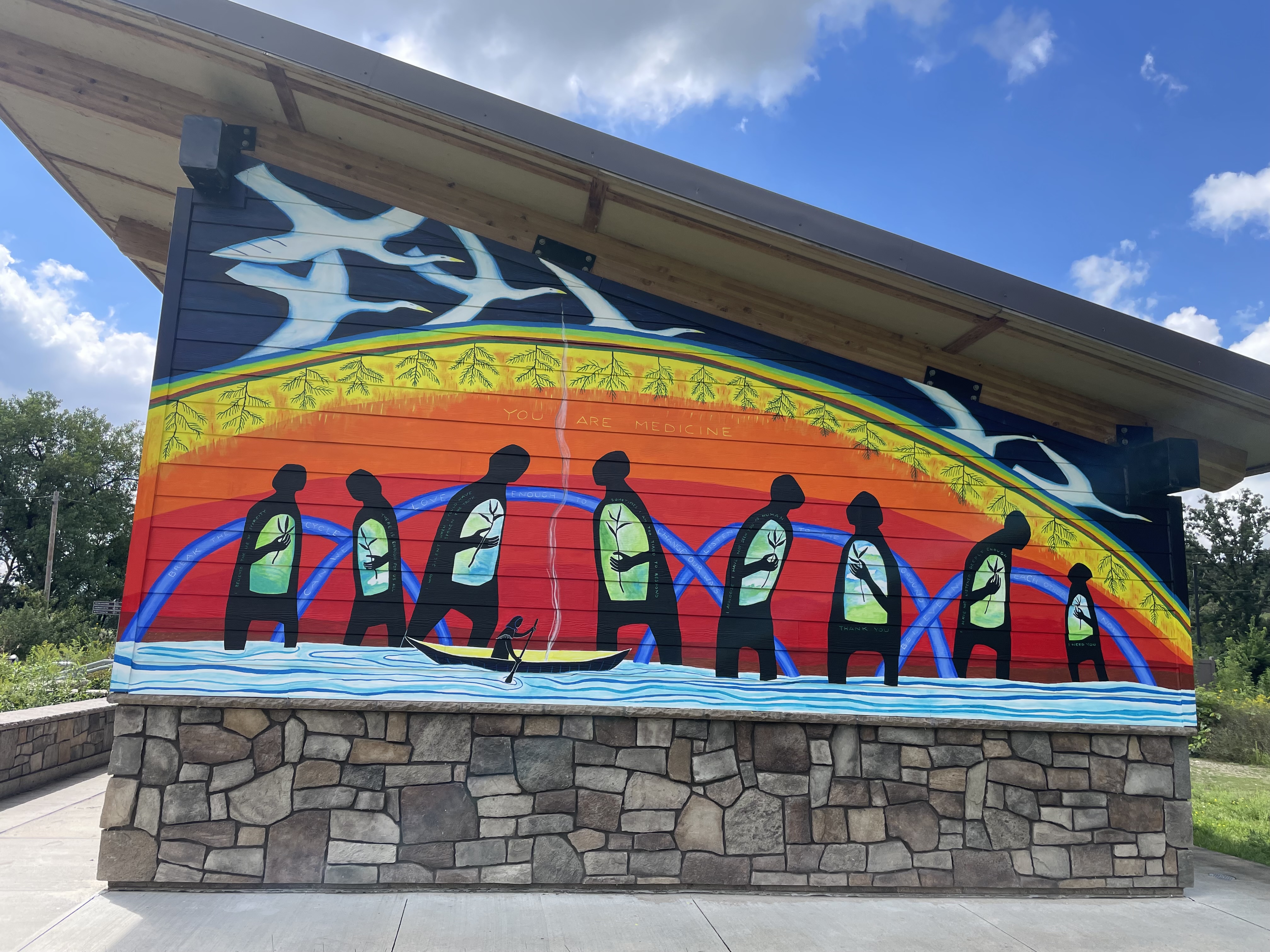
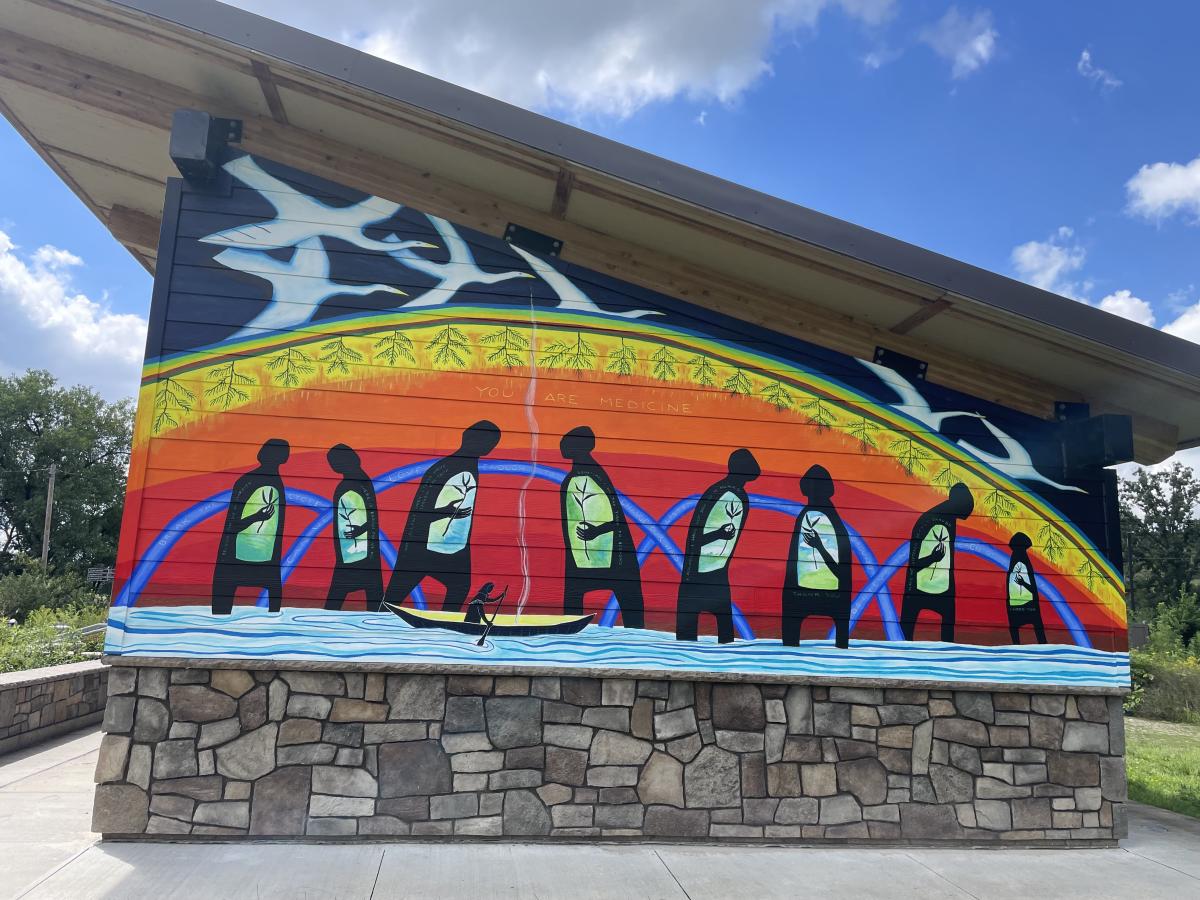
Healing Bridge of Cedar - Cedar, a sacred medicine, is used in prayer, healing, and protection. The scent of cedar reminds visitors of the bridge between the physical and spiritual worlds.
You are Medicine. A healing bridge. This side beckons us to be a bridge of humans bending into each other, opening the expansive sky within ourselves to listen and speak with each other, even across the pain of human cruelty that this ground remembers. There is a time when European settlers banished the Dakhóta from this, their homeland. Now is a time of healing, of continued Dakhóta resilience, a time of flourishing.
People bend toward each other, there is a bridge that runs through them, and a bridge of Cedar boughs above. And there is ‘Old Bets’ (Tara’s great, great, great, great grandmother Hazainyanke Win Betsey St. Clair) with her canoe. She is one of the original bridges of this site, carrying people across the waterways. Cedar smoke is rising as an offering. (Cedar is one of the 4 major Healing Plants of the Dakhóta Peoples.)
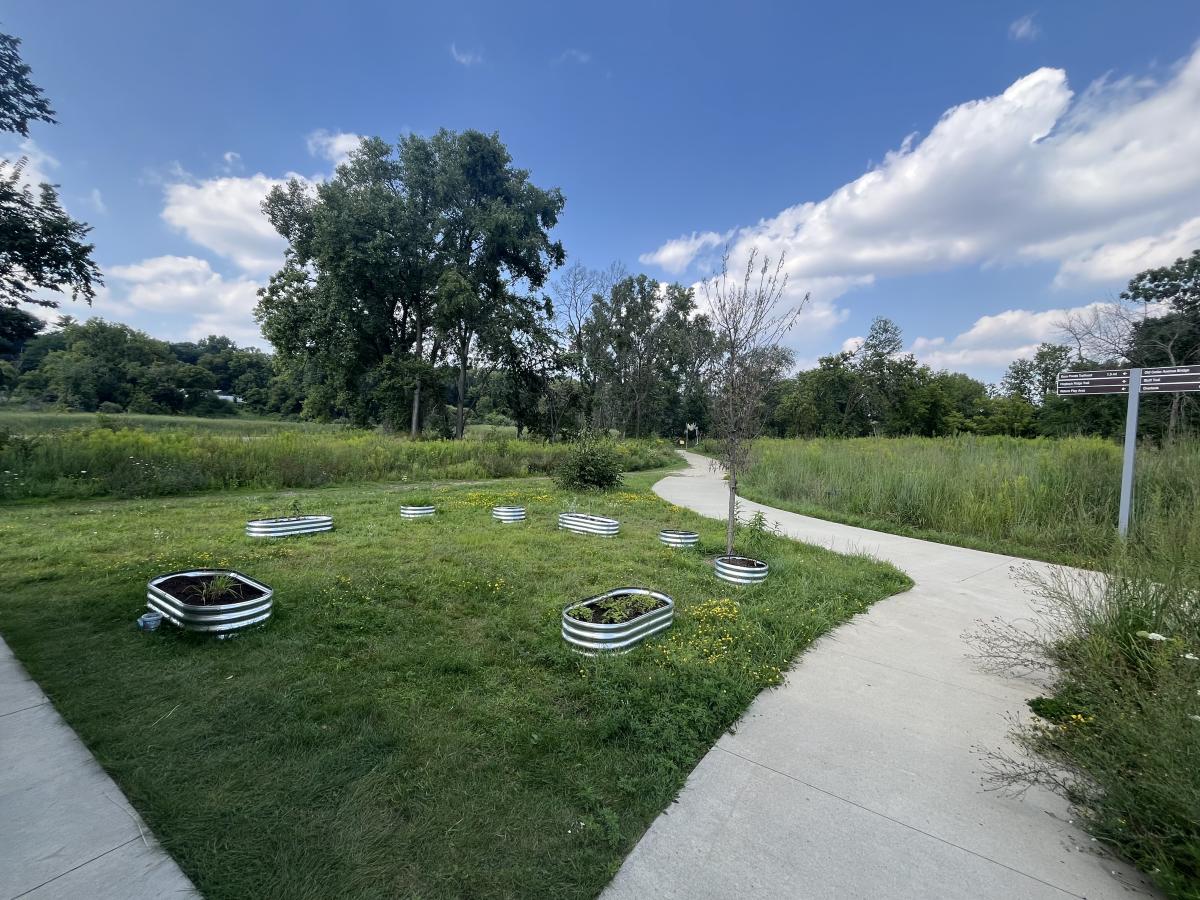
May we always approach each other as Relatives. May we be Medicine for each other and for ourselves. May we live with gratitude for this ground. This place, this time, this opportunity to be fully alive. Here too is a garden planted by Tara Perron, Tanáǧidaŋ Tó Wíŋ, with many old and young helpers. It is a medicine garden, a garden of plants native to this place, growing for the healing of all.
Recurring Elements Help Carry the Story
Throughout the mural, recurring images and ancestral references hold layers of meaning:
- A Stream of Water flows around all four sides, echoing the life force that connects us.
- Egrets symbolize grace, migration, and continuity.
- Dakhóta Words and Languages honor cultural presence and resilience.
- Participant Reflections from the engagement event appear as prayers and affirmations painted into the design.
- The Dakhóta Medicine Wheel represents balance, cycles, and interdependence.
- Hazainyanke Win (Betsey St. Clair)—Tara Perron’s ancestor—appears as a guiding spirit. She provided the first documented ferry service in the area and taught women how to make birch canoes, bridging communities across water.
Each symbol carries both history and invitation: to see the land not as backdrop, but as teacher.

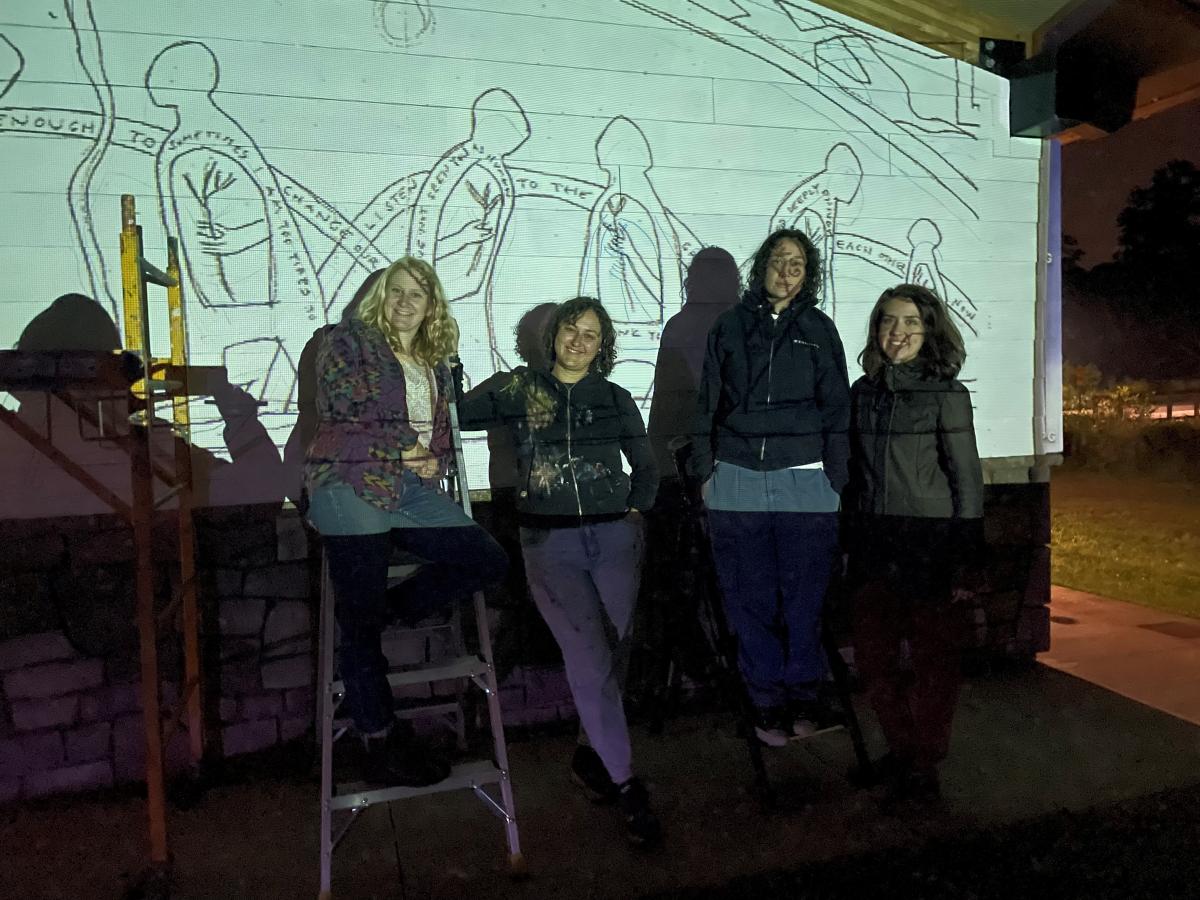
In July 2023, community members joined the artists for a pop-up event to listen deeply to the site; its wind, its river, its stories. Participants shared words, sketches, and reflections that were later woven into the mural.
This practice of listening is at the heart of the project. Visitors are invited to continue listening; to pause, to notice, to offer their own quiet bridge of relationship with this place.
“The mural holds our shared prayer,” says Spieler. “It’s not only paint—it’s the echoes of everyone who stood here and listened.”
Public Engagement Report by Sandy Spieler (Summary)
The Haŋté (Cedar) Healing Bridge mural at the Old Cedar Avenue Bridge Trailhead was shaped by a deeply relational, place-based public engagement process spanning several years. Artist Sandy Spieler approached the project as an act of listening - walking the site across seasons, researching Dakhóta history, and engaging in ongoing conversations with community members, site staff, and visitors throughout the creation of the work.
Early in the process, Spieler partnered with Dakhóta writer and cultural advocate Tara Perron (Tanáǧidaŋ Tó Wíŋ), whose ancestral ties to the area grounded the project in Dakhóta homeland. Together, they hosted a pop-up listening session during the 2023 Wakpa Art Event, inviting participants of all ages and backgrounds to experience the site with their senses, reflect on its meaning, and contribute written and drawn responses. These community reflections directly informed the mural imagery and text.
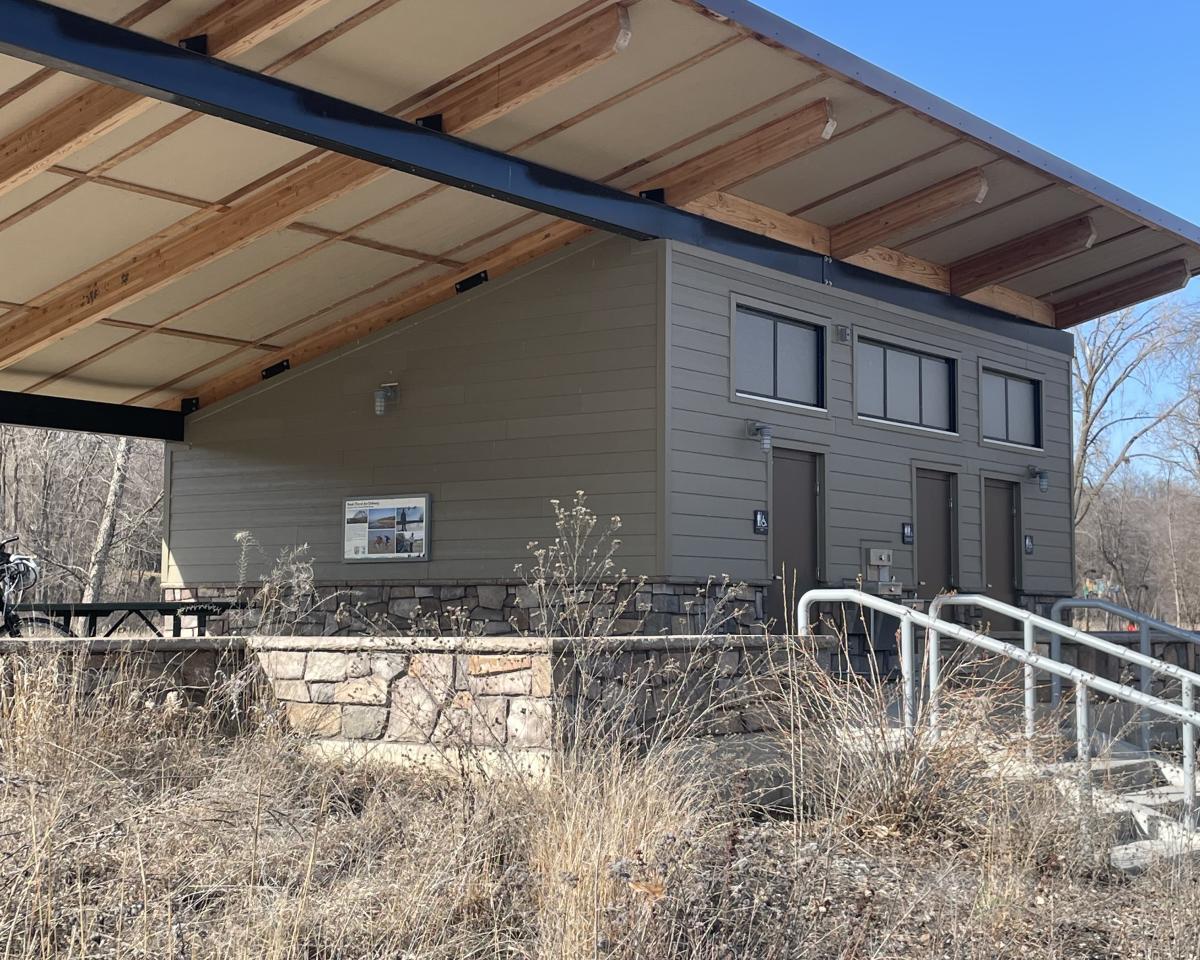
Rather than introducing a new structure into the wildlife refuge, the project transformed the existing trailhead building into a four-sided mural that treats “Cedar Bridge” as a living, healing verb. Each side reflects a core theme.
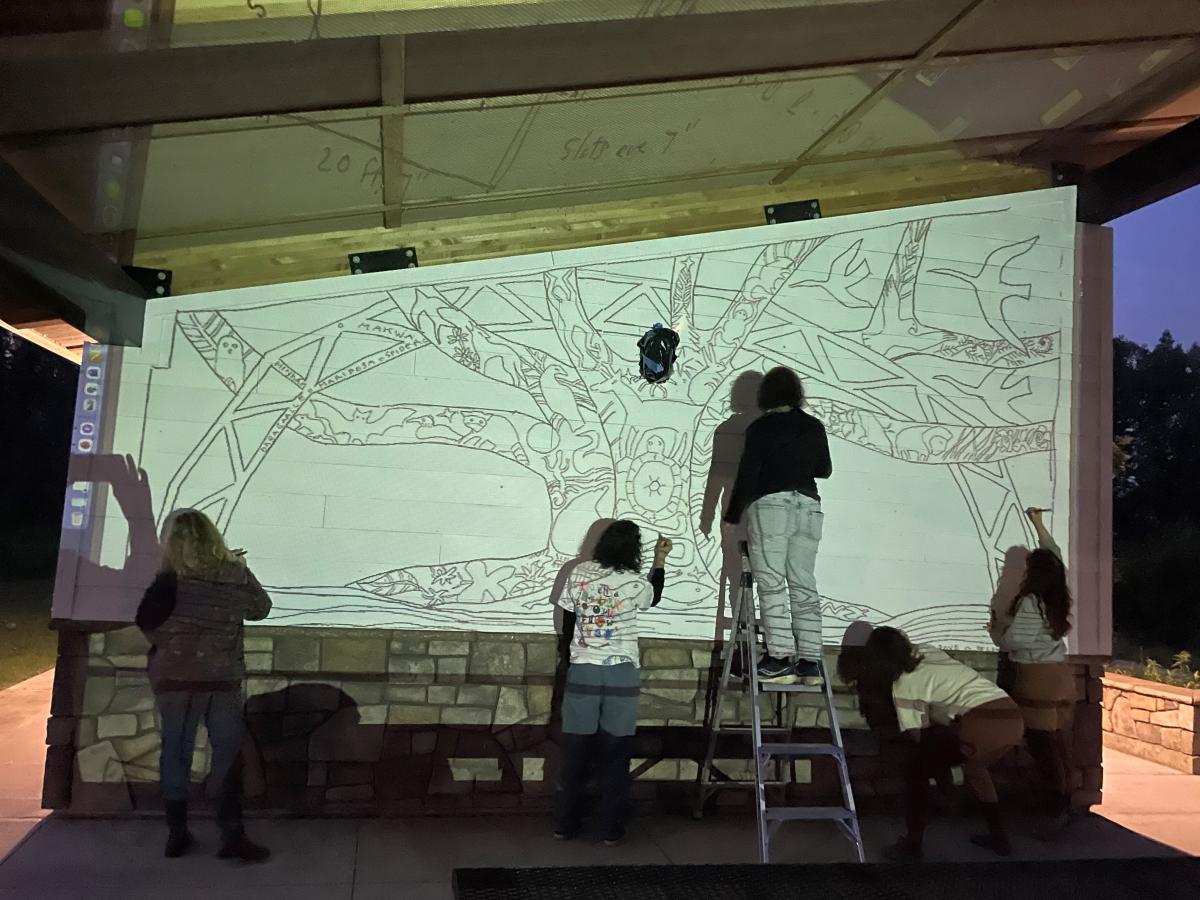
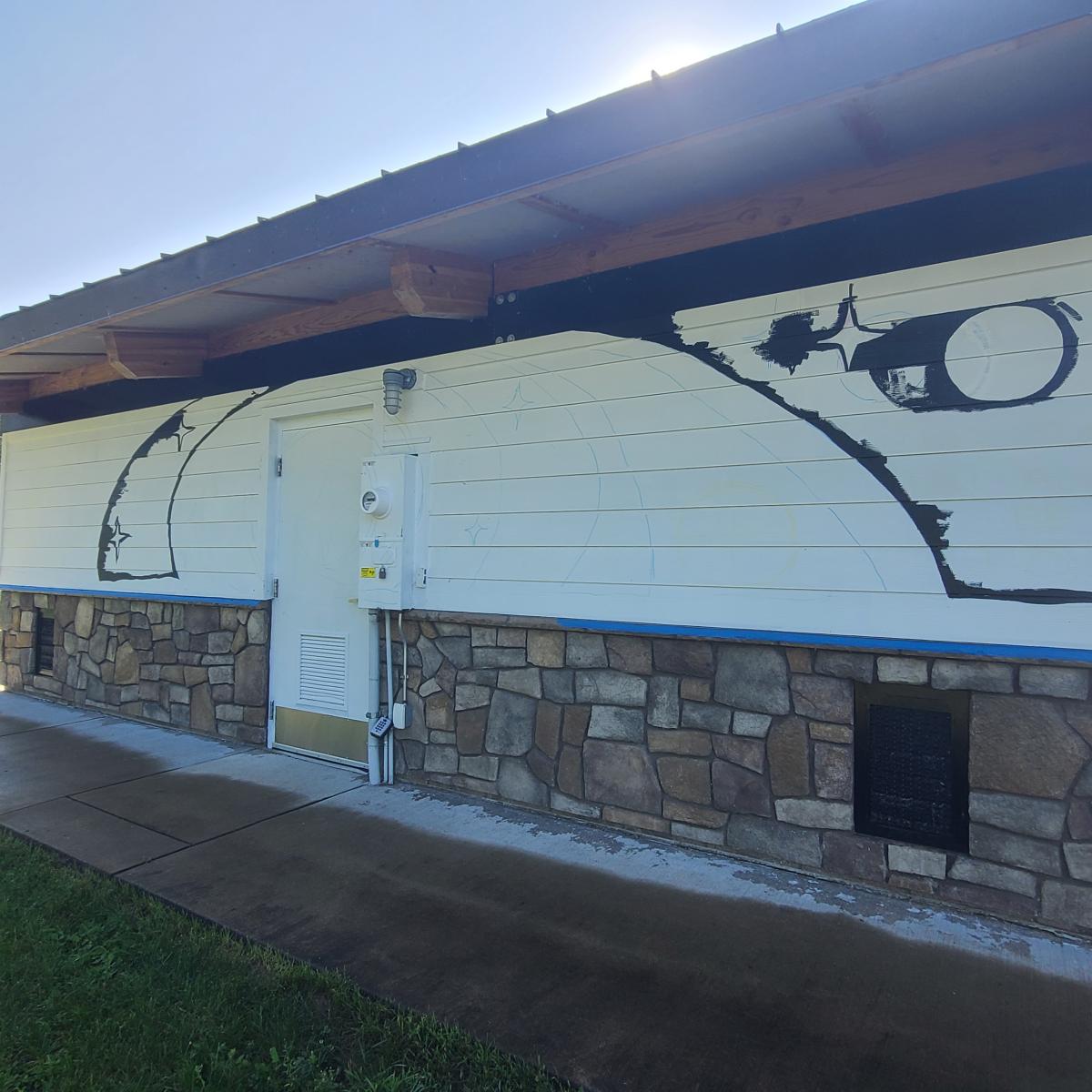
During months of painting, the mural became an active site of engagement. Thousands of visitors stopped to ask questions, share stories, and observe the work in progress. Community members were invited to write “Words of Thanks for Water” in their own languages around the drinking fountain, resulting in contributions in more than a dozen languages and sparking meaningful cross-cultural conversations.
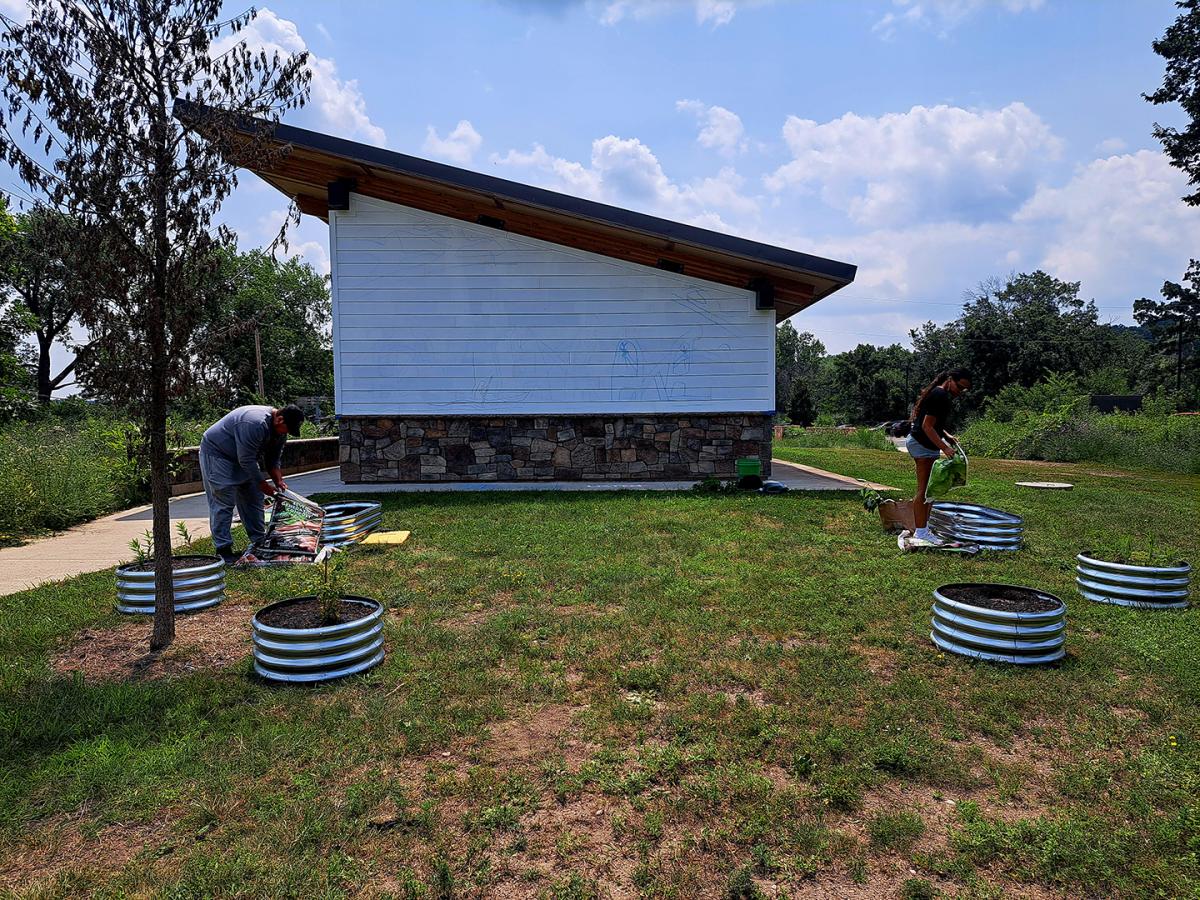
The final phase of the project coincided with Tara's planting of a Dakhóta medicine garden, further deepening the site’s role as a place of reflection, healing, and learning. The mural and garden together encourage visitors to recognize the land as Dakhóta homeland, honor water and all living relatives, and continue building relationships across cultures, generations, and histories.
Near the Trailhead building grows a living Indigenous garden, designed in partnership with local Indigenous knowledge keepers. The garden features native and culturally significant plants; many used for food, medicine, and ceremony.
Educational programs accompanying the project teach traditional seed saving, emphasizing biodiversity, ancestral wisdom, and food sovereignty. Here, the act of planting becomes another form of bridging—between generations, between cultural practice and ecological care.
We Are Medicine: plant elders
Milkweed - Phanúŋpadaŋ
Wild rose - Uŋžíŋziŋtka
Echinacea - lčháhpe hu
Sage - Pȟežíȟota
Wild bee balm - Waȟpé waštémna
Sandy Spieler
A community artist known for work that interweaves art, ecology, and social reflection. Spieler’s projects often transform everyday places into spaces of shared ritual and renewal.
Tara Perron (Tanaǧidaŋ To Wiŋ)
A Dakota cultural educator and storyteller whose art reconnects people with land and language. Perron’s teachings center on respect, reciprocity, and remembering through practice.
Together, they created not just a mural, but a gathering space where art, story, and the living environment meet.
The Old Cedar Avenue Bridge Trailhead is located in Bloomington, near the Minnesota Valley National Wildlife Refuge.
9551 Old Cedar Ave S, Bloomington, MN 55425 | Link to Map
The mural and garden are open to visitors year-round, inviting reflection through changing seasons.